Guides
 Hoya: the complete guide to the wax flower
Carnosa, heart-leaf kerrii, threadlike linearis: everything to grow Hoyas and earn their fragrant waxy flowers.
 Plenova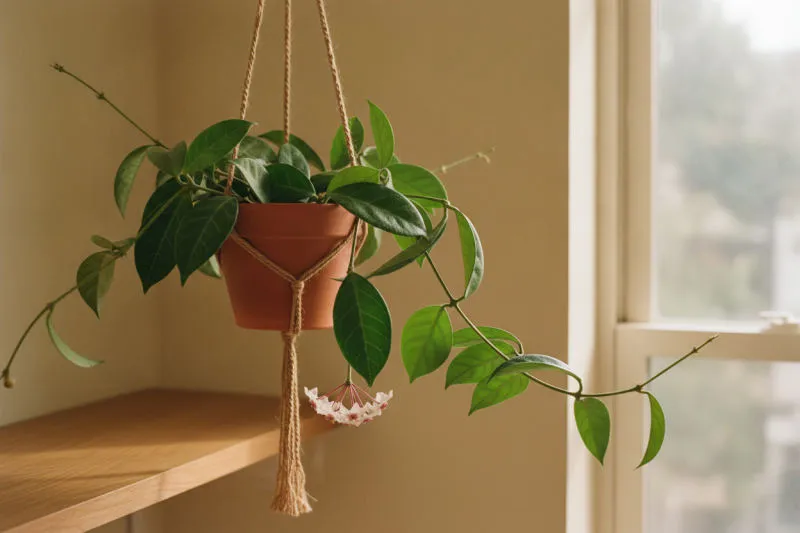
Contents 13
The Hoya, nicknamed "wax flower" or "porcelain flower" because of the waxy look of its blooms, is one of the most surprising houseplants. Often plain foliage, but umbel-shaped fragrant flowers that look made of porcelain. Here is how to grow them.
What it is
Genus Hoya, with over 500 species. Native to Southeast Asia, Australia, and the Pacific. Family Apocynaceae.
Common traits: climbing or trailing plants, fleshy to semi-fleshy leaves, white sap (latex), waxy umbel flowers.
Common varieties
Hoya carnosa
The classic. Glossy dark green leaves, white flowers with a pink-red star center. Fast growth. Great starter Hoya.
Hoya carnosa 'Krimson Queen'
Carnosa variant with cream-white edged leaves, sometimes pink on new growth.
Hoya carnosa 'Krimson Princess'
Krimson Queen cousin with cream variegation in the center instead of edges.
Hoya kerrii (heart leaf)
Often sold as a single heart-shaped leaf in a small pot, as a Valentine's gift. A single leaf can survive years without growing into a plant (no stem). To grow a real plant, you need a cutting with a node, rarer.
Hoya linearis
Very different: long thin trailing stems with linear (almost threadlike) leaves. Spectacular hanging. More fragile.
Hoya pubicalyx
Long dark green leaves, dark red almost black star-shaped flowers. Vigorous growth.
Hoya bella (curtisii)
Small Hoya with white and pink flowers, moderate growth.
Light
Ideal: very bright indirect light. Near an east or west window. The more light it gets, the more it blooms.
Tolerates: medium indirect light. Slow growth, few flowers.
Avoid: dim light. No flowers, little growth.
Morning direct sun: yes, brief and filtered. Afternoon direct sun: avoid in summer (sunburn).
Watering
Semi-succulent plant: its fleshy leaves store water.
Rhythm:
- Summer: every 10-14 days.
- Winter: every 21-30 days.
Confirm the substrate is dry 1-2 inches deep. Dry: water. Moist: wait.
Classic mistake: too much water. Hoyas rot fast in constantly moist substrate.
Substrate
Very free-draining. Ideally aroid mix (potting + bark + perlite) or DIY:
- 30% potting mix
- 30% perlite
- 30% composted pine bark
- 10% horticultural charcoal
Hoya is epiphytic in the wild, its roots love air.
Pot
Pot with generous drainage. Hoya likes to be very snug. A pot too big slows blooming.
Repotting: only when roots overflow noticeably. Every 3-4 years.
Fertilizer
Monthly from April to September, bloom fertilizer (high phosphorus) half-diluted. None in winter.
Triggering Hoya blooms
The myth: "Hoyas never bloom". The truth: they bloom a lot, but they need a few conditions:
- Bright indirect light: factor number one.
- Mature plant (at least 2-3 years).
- Tight pot: do not over-size.
- Regular but spaced watering.
- Bloom fertilizer in spring.
- Slight cool spell in winter (60-63°F at night) can trigger.
Once a Hoya starts blooming, it reblooms each year on the same peduncles (the "dry stalks" left after the first bloom). NEVER cut the flower spurs, otherwise the plant has to remake them and you lose 1-2 years.
The cut-spur trap
The most common beginner mistake. After bloom, flowers fall and a small dry stalk remains. People think it is dead, they cut it. Fatal mistake.
The peduncle is the flower platform: it will rebloom next year on the same spot. Cutting it means losing the next bloom.
Propagation
Very simple by cutting:
- Cut a 4-6 inch stem with at least 2-3 nodes.
- Remove lower leaves.
- Place in water or directly in moist soil.
- 4-8 weeks for first roots.
- Pot up when roots reach 2 inches.
Toxicity
Hoya is non-toxic to cats, dogs, and humans. One more to add to the safe-plant list.
Note: the white latex from cuts can irritate sensitive skin. Wash hands after taking a cutting.
Common problems
- No blooming — Young plant or low light → Patience, more light
- Cut peduncle — Human error → Never cut, just wait
- Wilting leaves — Lack of water or rotted roots → Check substrate
- Black spots on leaves — Overwatering → Reduce watering
- No growth — Pot too big or low light → Repot tighter, more light
- Buds drop — Thermal shock during blooming → Stabilize environment
With Plenova
Plenova identifies your Hoya from a photo (carnosa, kerrii…) and reminds you to water and feed it at the pace of its species, with longer gaps in winter. If leaves start to mark, a photo diagnosis looks for the cause.
A settled Hoya can bloom for 30 years, on the same peduncles, more generously each year. A long-term investment in everyday beauty.
Found this useful? Pass it on.
 Guides 8 min
  Guides
 June 27, 2026
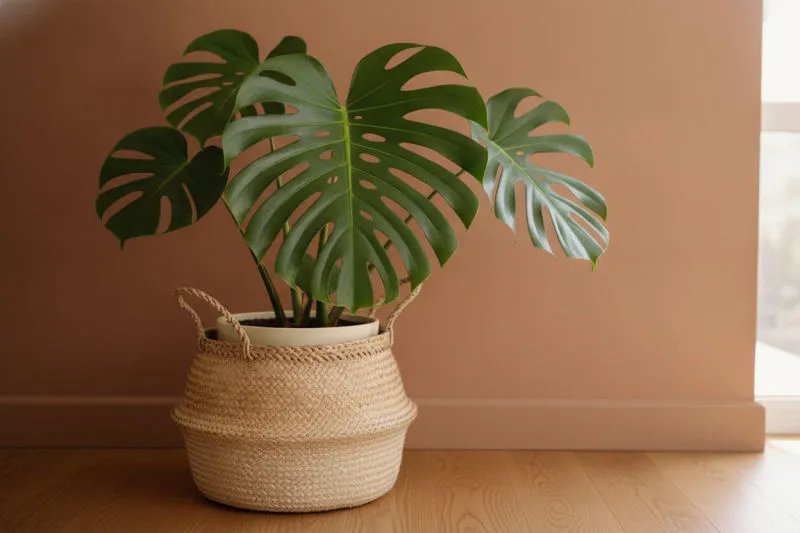
Caring for your Monstera, the guide to those iconic split leaves
Monstera deliciosa is the houseplant of the decade. Light, water, fenestration, aerial roots: here is how to turn yours into a real indoor jungle.
Read the article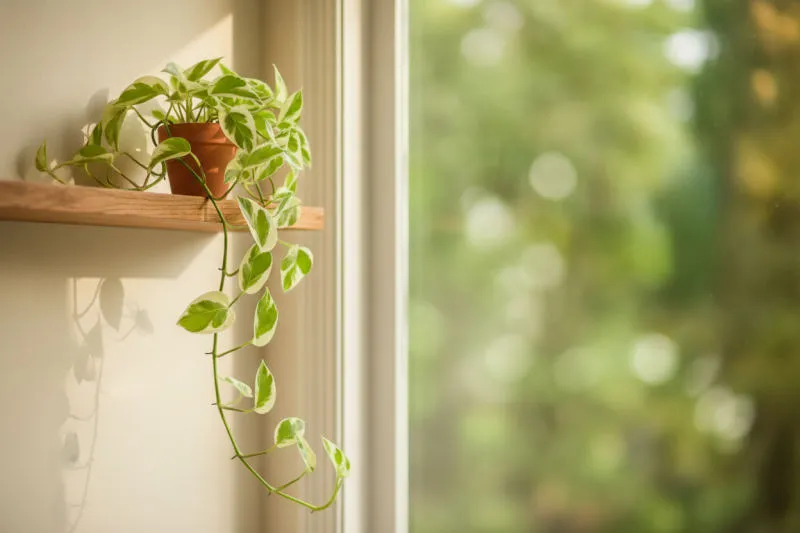 Guides 6 min
 June 26, 2026
Pothos, the complete guide: varieties, care and propagation
Golden, Marble Queen, Neon, N'Joy: everything you need to know about pothos, the most popular houseplant in the world.
Read the article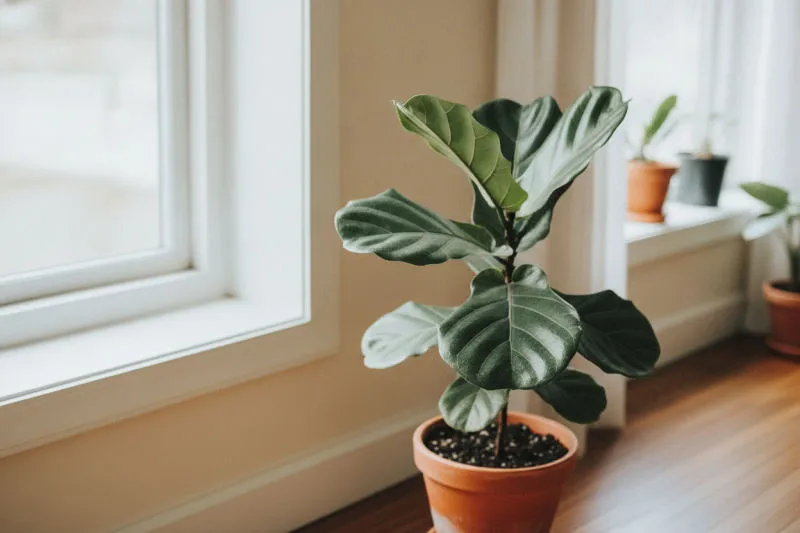 Guides 9 min
 June 25, 2026
Caring for your Ficus, lyrata, benjamina or rubber tree
Ficus is a whole genus, not one plant. Light, water, latex sap, pruning: a guide to figuring out your variety and keeping it beautiful for years.
Read the article