
 Soil
Soil Nitrogen deficiency
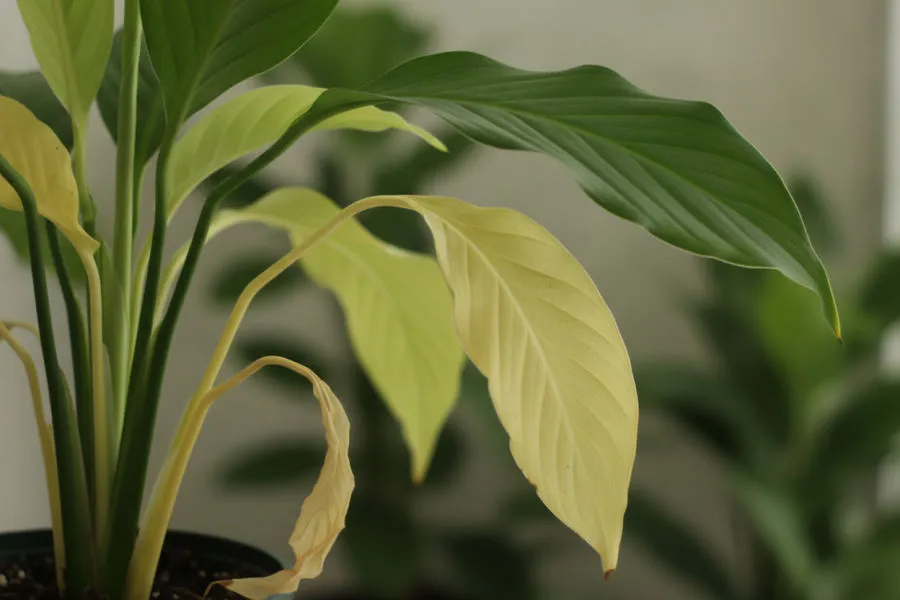
Even yellowing from the bottom
Even yellowing of the oldest leaves first.
Also called: lack of nitrogenyellow lower leavesnitrogen deficiencyplant paling from the bottom

Severity
Minor
No rush: fix it at your own pace.
Parts affected
- Leaves
- Stems
- Flowers
- Fruit
- Roots
- Soil
Family

Soil
Tired, compacted or cramped soil holds the whole plant back.
Understand
What is happening inside the plant
Nitrogen is an essential, mobile nutrient, crucial for producing chlorophyll, the green pigment, and for general growth.
When the soil runs short, the plant moves nitrogen out of its oldest leaves into new growth to keep going, producing a gradual yellowing that starts at the bottom. That is what makes the diagnosis so reliable: nitrogen deficiency ALWAYS starts with the lower leaves. Untreated, it brings growth to a complete stop, causes leaf drop and leaves the plant weak against disease.
Check
How to be sure
Tick what you can see on your plant.
Tick the signs you can see and the gauge will add them up.
Some signs match. If the rest does not fit, look at the related problems further down.
Most of the signs match: this is very likely it. What to do
Signs and causes
What you see, and why
Symptoms
- Lower leaves entirely pale yellow, veins included
- New leaves smaller and paler than the old ones
- Thin, spindly stems and a generally sparse habit
- Growth stopped in the middle of the growing season
Causes
- Exhausted substrate, in place for more than two years
- No feeding at all since the start of the growing season
- Heavy watering that leaches nitrogen out of the pot
- A very carbon-rich mulch, which locks up nitrogen as it breaks down
What to do
The action plan
In order. Tick each step once it is done.
0/5 done
-
Apply a balanced fertiliser at normal dose, onto an already moist substrate.
-
Repeat every two weeks through the growing season.
-
Repot into fresh compost if the substrate is over two years old.
-
Remove fully yellow lower leaves once they have gone soft.
-
Judge recovery on the NEW leaves: the old ones will not green up again.
Prevent
Stopping it coming back
-
Feed throughout the growing season, never during winter rest.
-
Renew the substrate every two to three years.
-
Do not overwater: water passing through takes nitrogen with it.
Questions
Common questions
Bottom or top, why is that decisive?
Because nitrogen is mobile and iron is not. Yellowing that starts at the BOTTOM is a nitrogen deficiency; at the TOP, it is an iron deficiency.
How long before I see an effect?
One to two weeks on new growth. Leaves already yellow will stay yellow, the plant has taken what it could from them.
Can I give too much?
Yes, and it shows: dark, soft foliage, floppy stems, no flowering, and much more appeal to aphids.
 Keep an eye on it
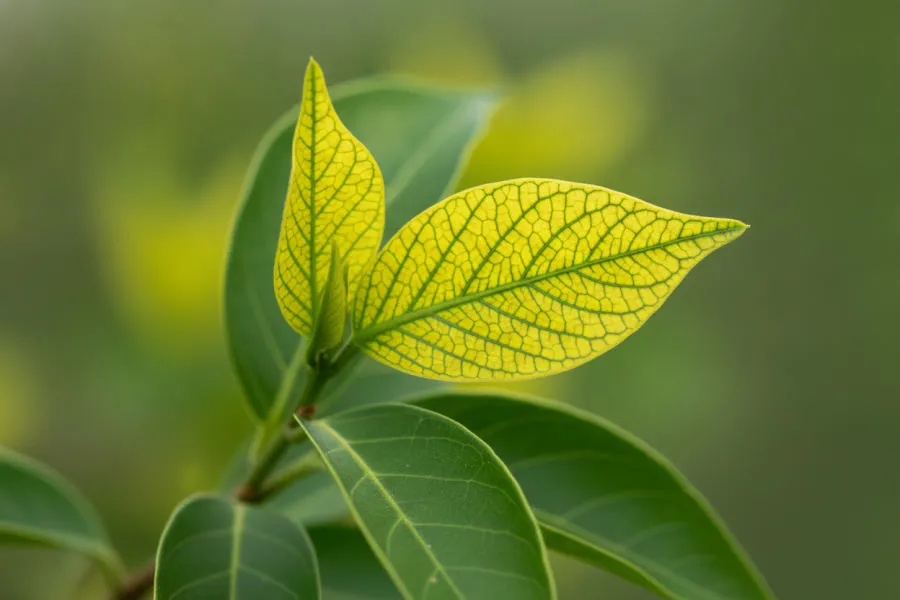
 Yellow young leaves, green veins
Yellowing of the young leaves, with veins that stay green.
Causes and fixes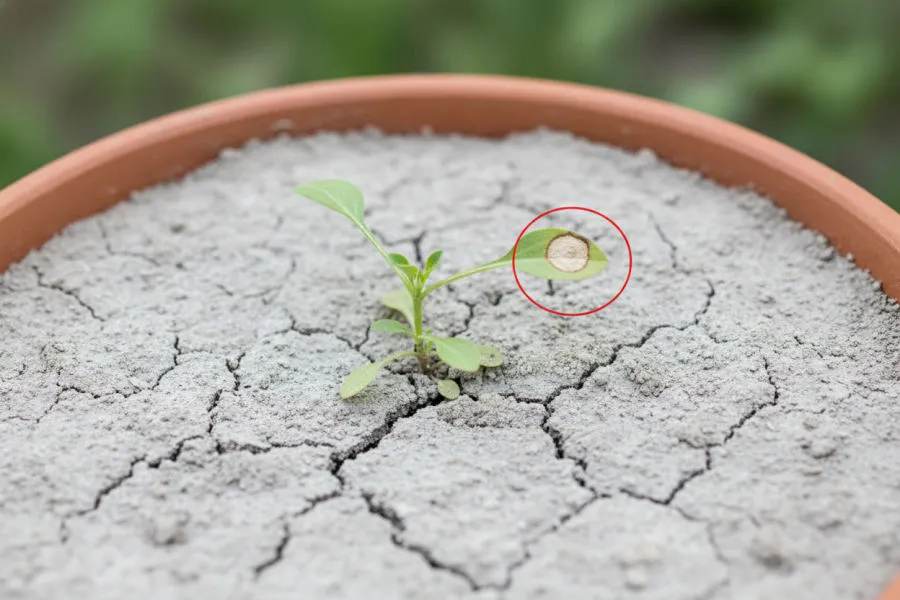 Minor
Minor Old soil, listless plant
The plant stalls in old, grey compost with no structure left.
Causes and fixes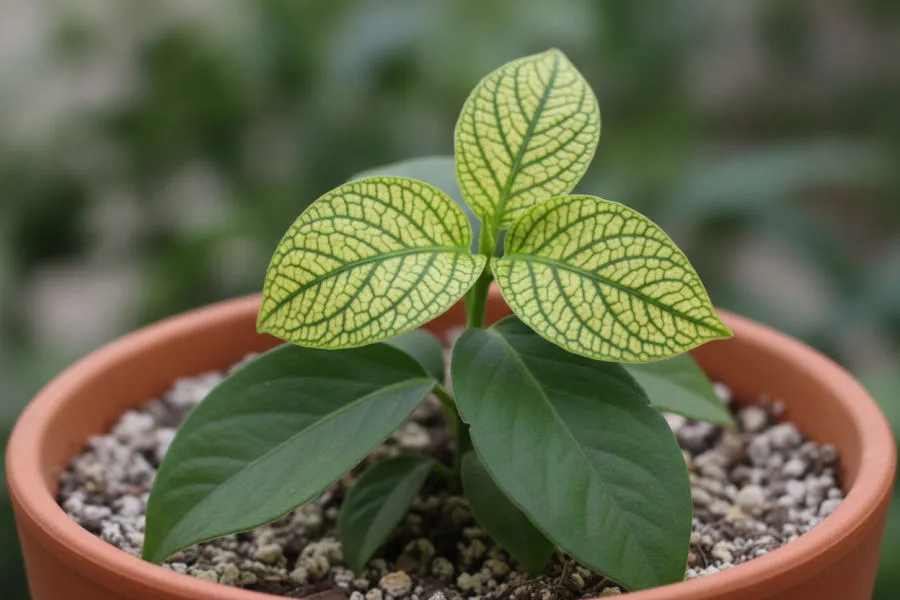 Keep an eye on it
 Yellow leaves, green veins
Leaves turn yellow between veins that stay green.
Causes and fixes