
 Soil
Soil Iron deficiency (chlorosis)
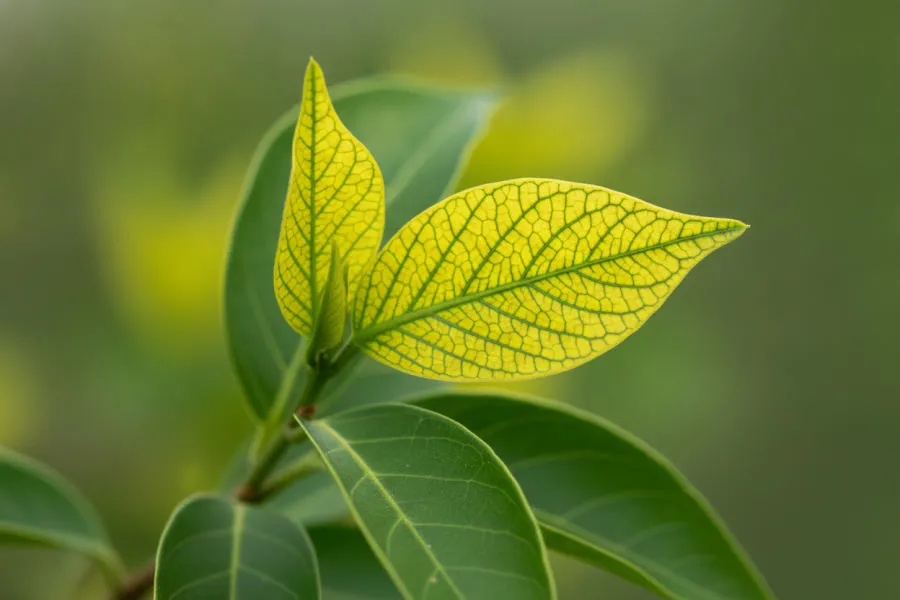
Yellow young leaves, green veins
Yellowing of the young leaves, with veins that stay green.
Also called: chlorosisiron chlorosisgreen veins yellow leaveslack of iron

Severity
Keep an eye on it
Deal with it this week, before it spreads.
Parts affected
- Leaves
- Stems
- Flowers
- Fruit
- Roots
- Soil
Family

Soil
Tired, compacted or cramped soil holds the whole plant back.
Understand
What is happening inside the plant
Iron deficiency, or iron chlorosis, is a nutritional disorder that stops the plant synthesising chlorophyll, the green pigment needed for photosynthesis.
It mainly occurs when soil pH is too high, alkaline, which blocks iron uptake by the roots even though it is present in the compost. Because iron does not move within the plant, it is the YOUNGEST leaves that pale, while the older ones stay green. Without intervention, new leaves grow paler and paler, growth slows sharply and the whole plant weakens.
Check
How to be sure
Tick what you can see on your plant.
Tick the signs you can see and the gauge will add them up.
Some signs match. If the rest does not fit, look at the related problems further down.
Most of the signs match: this is very likely it. What to do
Signs and causes
What you see, and why
Symptoms
- Bright yellow young leaves with a clearly drawn network of green veins
- Almost white new leaves in advanced cases
- Older leaves still green, which makes the contrast sharp
- Young leaf edges drying out in severe cases
Causes
- Substrate pH too high, making iron chemically unavailable
- Watering with hard water, building up limescale in the pot
- An unsuitable substrate for an ericaceous species
- Excess water, which also hinders micronutrient uptake by the roots
What to do
The action plan
In order. Tick each step once it is done.
0/5 done
-
Switch to lime-free water: rainwater or demineralised water.
-
Apply a chelated iron feed, which stays available even in chalky soil, at the stated dose.
-
Repot into a suitable compost if the species needs acid soil.
-
Scrape off and replace the top centimetre if it carries a whitish deposit.
-
Check that the pot drains: a waterlogged substrate also blocks iron uptake.
Prevent
Stopping it coming back
-
Water ericaceous species with rainwater.
-
Choose a substrate matched to the pH the species needs.
-
Check compost pH when repotting sensitive plants.
Questions
Common questions
Iron or nitrogen, how do I tell?
By the tier and the veins. TOP leaves with veins staying GREEN: iron. BOTTOM leaves, evenly yellow: nitrogen.
Will the yellow leaves green up again?
Partly, and only if the deficiency is recent. The real measure of success is the new leaves.
Why is a complete fertiliser not enough?
Because its iron is in a form that chalky soil locks up. You need a chelate, which stays available despite the pH.
 Minor
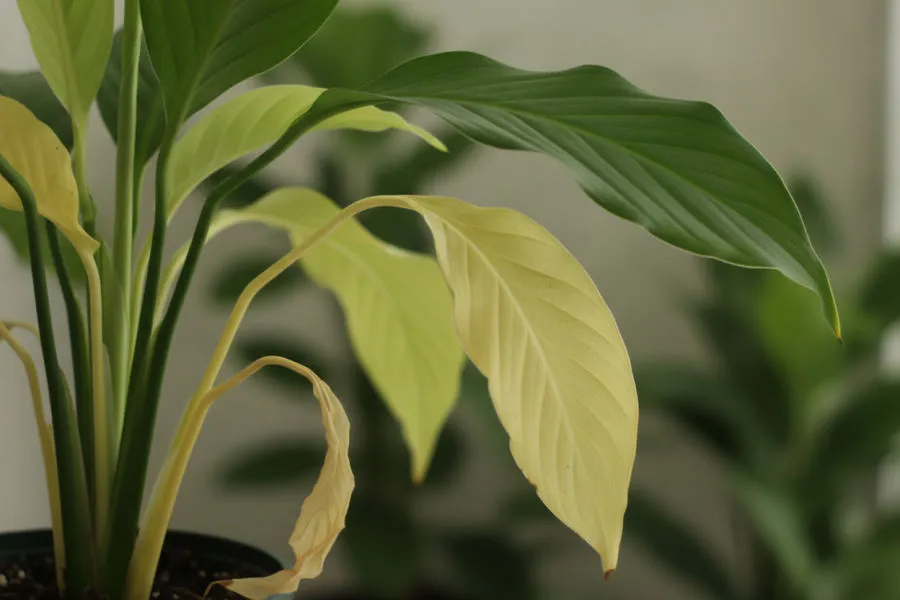
Minor Even yellowing from the bottom
Even yellowing of the oldest leaves first.
Causes and fixes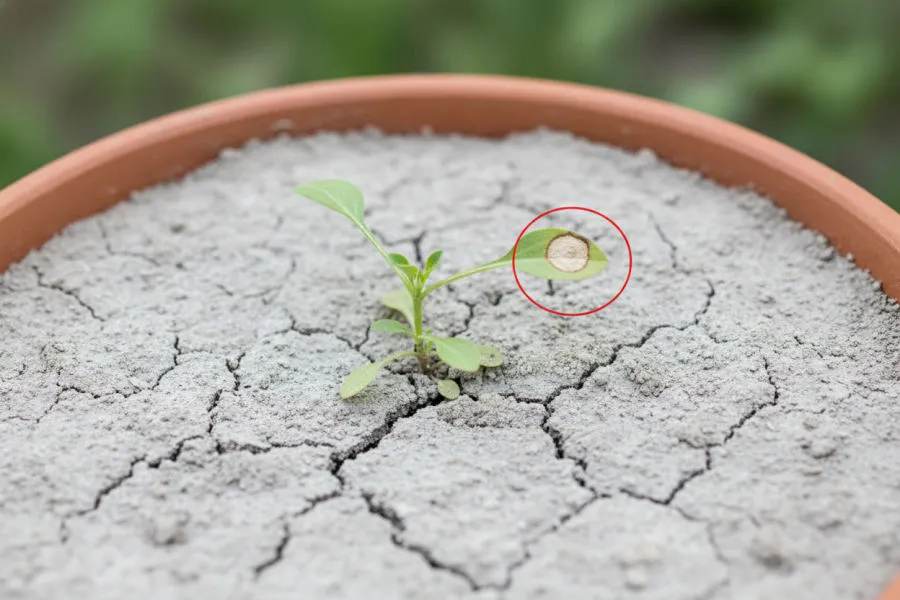 Minor
Minor Old soil, listless plant
The plant stalls in old, grey compost with no structure left.
Causes and fixes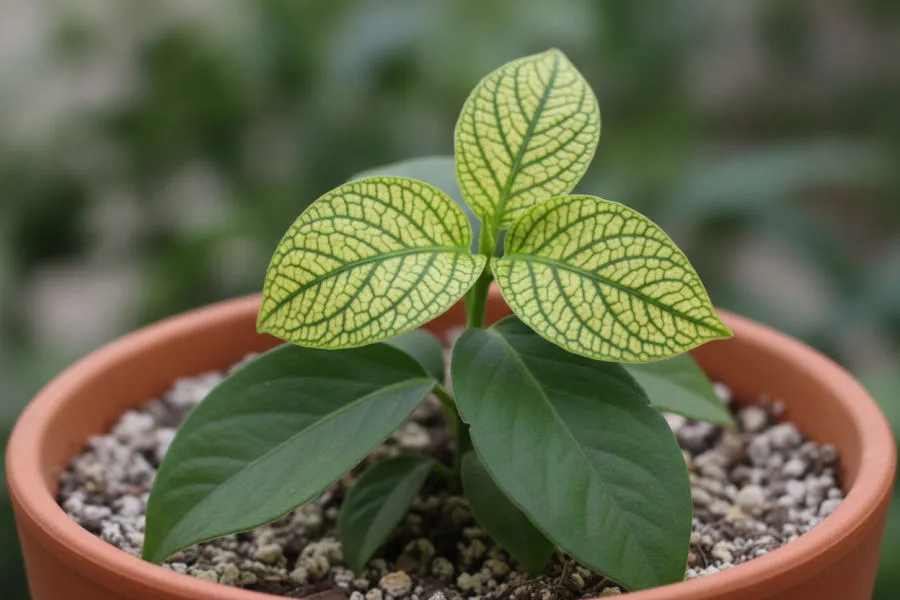 Keep an eye on it
 Yellow leaves, green veins
Leaves turn yellow between veins that stay green.
Causes and fixes