
 Diseases
 Rust
Orange pustules
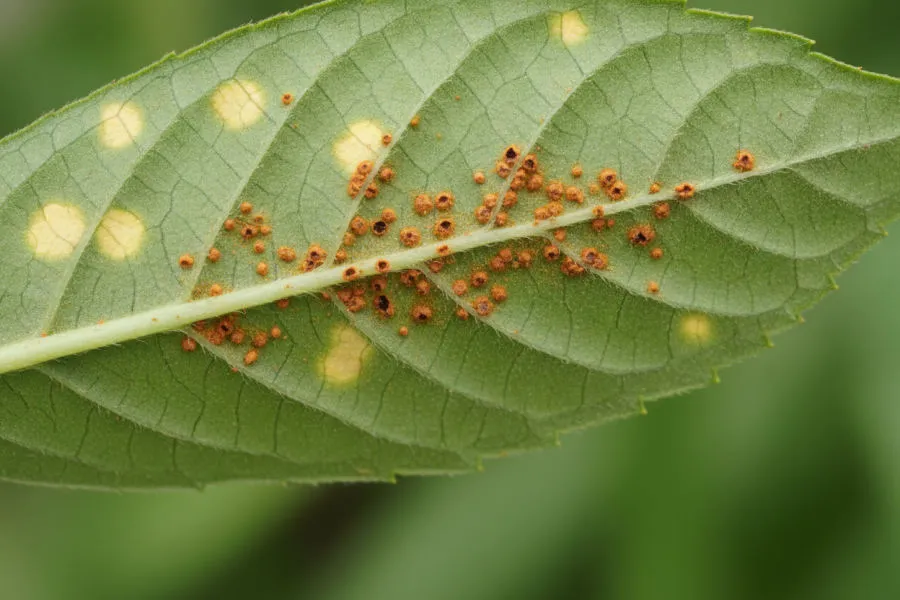
Orange, powdery pustules appearing on the undersides of leaves.
Also called: rustorange pustulesorange spotsspotted underside

Severity
Keep an eye on it
Deal with it this week, before it spreads.
Parts affected
- Leaves
- Stems
- Flowers
- Fruit
- Roots
- Soil
Family

Diseases
Fungi, bacteria and rot: the signs and the right moves.
Understand
What is happening inside the plant
Rust is a disease caused by a fungus that produces pustules filled with powdery spores, orange to brown in colour.
The fungus feeds on leaf cells, weakening the plant by disrupting its ability to photosynthesise. Untreated, the infection spreads, causing yellowing, drying and early leaf fall, and so slowing overall growth.
Check
How to be sure
Tick what you can see on your plant.
Tick the signs you can see and the gauge will add them up.
Some signs match. If the rest does not fit, look at the related problems further down.
Most of the signs match: this is very likely it. What to do
Signs and causes
What you see, and why
Symptoms
- Orange or rust-brown pustules on the leaf underside
- Matching yellow spots on the upper surface
- Leaves drying out and falling
Causes
- Prolonged moisture on the foliage
- Still air
- Spread from an infected neighbouring plant
What to do
The action plan
In order. Tick each step once it is done.
0/3 done
-
Cut off and dispose of every leaf bearing pustules.
-
Isolate the plant from the others.
-
Water at the base only, and ventilate.
Prevent
Stopping it coming back
-
Avoid wetting the foliage.
-
Space plants so air can circulate.
Questions
Common questions
Does the orange powder stain your fingers?
Yes, and that is the test: those are the spores. Wash your hands before touching another plant.
Should I bin the affected leaves?
Do not compost them. Spores survive a domestic compost heap: sealed bag and bin.
Can an affected leaf be cured?
No, the tissue has been consumed. Treatment protects the healthy leaves and stops the spread.
 Keep an eye on it
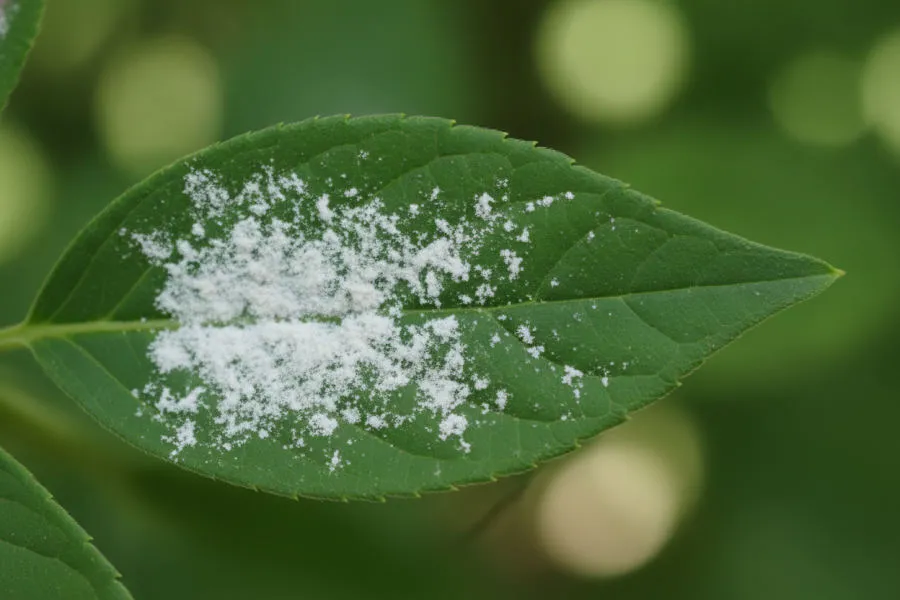
 White powder on leaves
A white, powdery film covering the leaves and stems.
Causes and fixes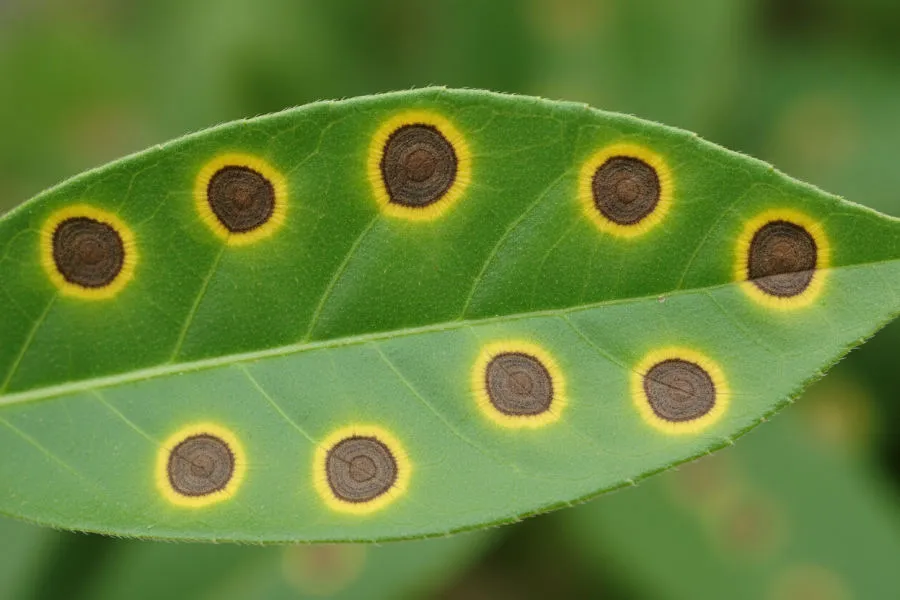 Keep an eye on it
 Brown haloed spots
Brown spots ringed with a yellow halo spread across the leaves.
Causes and fixes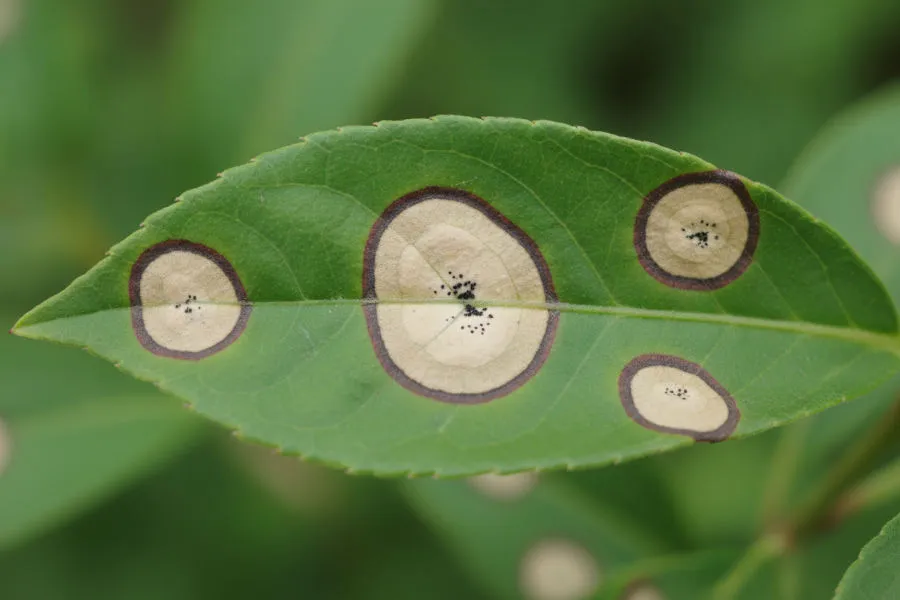 Keep an eye on it
 Beige spots with dark edges
Beige to black spots with clear dark borders hollow out the leaves.
Causes and fixes