
 Diseases
 Powdery mildew
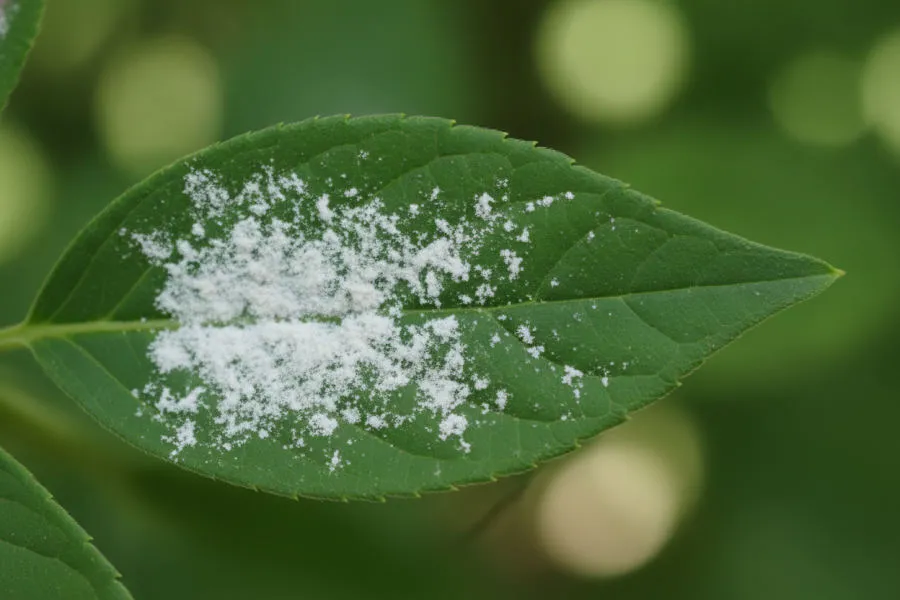
White powder on leaves
A white, powdery film covering the leaves and stems.
Also called: mildewwhite powderpowderyflour on leaves

Severity
Keep an eye on it
Deal with it this week, before it spreads.
Parts affected
- Leaves
- Stems
- Flowers
- Fruit
- Roots
- Soil
Family

Diseases
Fungi, bacteria and rot: the signs and the right moves.
Understand
What is happening inside the plant
Powdery mildew is a disease caused by a fungus that grows on the leaf surface, forming a white, floury-looking veil.
The fungus feeds by piercing epidermal cells to absorb their nutrients, which gradually weakens the plant. Without intervention the disease spreads, causing yellowing, distortion and early leaf fall, and so compromising photosynthesis and overall growth.
Check
How to be sure
Tick what you can see on your plant.
Tick the signs you can see and the gauge will add them up.
Some signs match. If the rest does not fit, look at the related problems further down.
Most of the signs match: this is very likely it. What to do
Signs and causes
What you see, and why
Symptoms
- A white powdery coating on the upper leaf surface
- It rubs off with a finger and comes back
- Leaves yellowing and distorting afterwards
Causes
- Still air with no circulation
- Wide swings between day and night temperature
- Foliage left wet in the evening
What to do
The action plan
In order. Tick each step once it is done.
0/3 done
-
Remove the worst leaves and dispose of them away from the pot.
-
Air the room and space the plants apart.
-
Water at the base, in the morning, keeping the leaves dry.
Prevent
Stopping it coming back
-
Keep air moving around the foliage.
-
Do not crowd plants together.
Questions
Common questions
It rubs off with a finger, is it really powdery mildew?
Yes, that is the test that tells it apart from limescale or a treatment residue, neither of which wipes away in one stroke.
Does humidity encourage it?
Humid, still air does; wet foliage does not, unlike most fungi, powdery mildew germinates on a dry leaf. Airflow matters most.
Should I remove affected leaves?
The worst-covered ones, yes, and take them out of the room: they do not recover and they release spores in every draught.
 Keep an eye on it
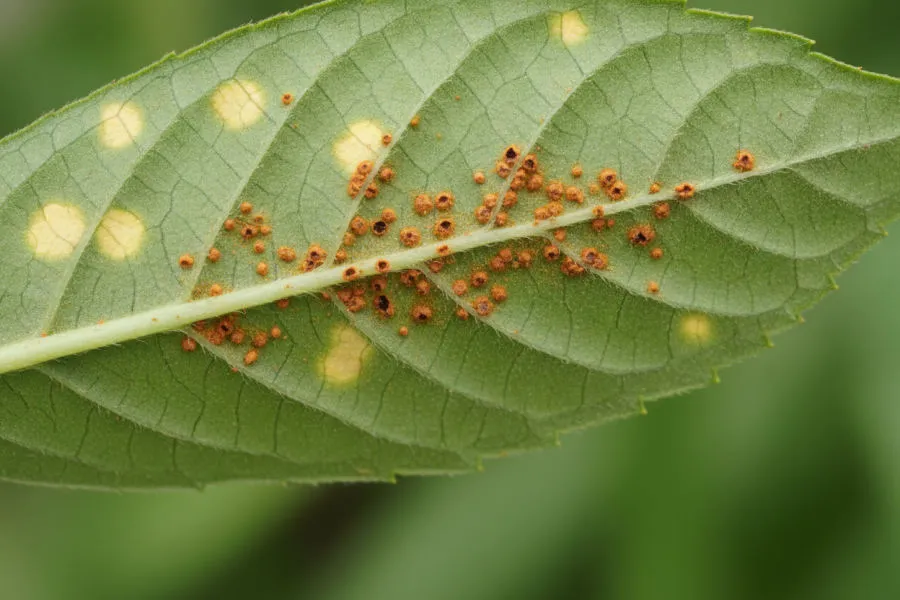
 Orange pustules
Orange, powdery pustules appearing on the undersides of leaves.
Causes and fixes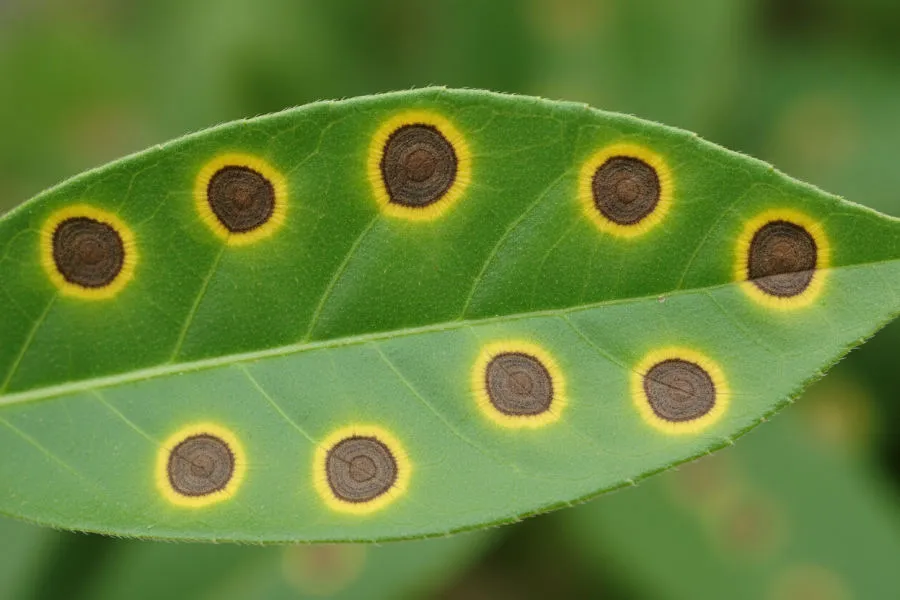 Keep an eye on it
 Brown haloed spots
Brown spots ringed with a yellow halo spread across the leaves.
Causes and fixes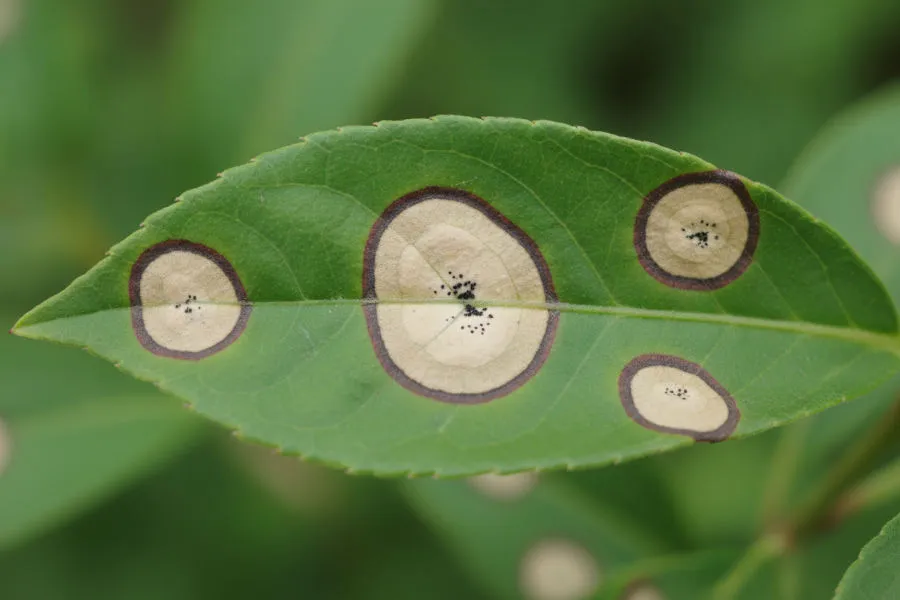 Keep an eye on it
 Beige spots with dark edges
Beige to black spots with clear dark borders hollow out the leaves.
Causes and fixes