
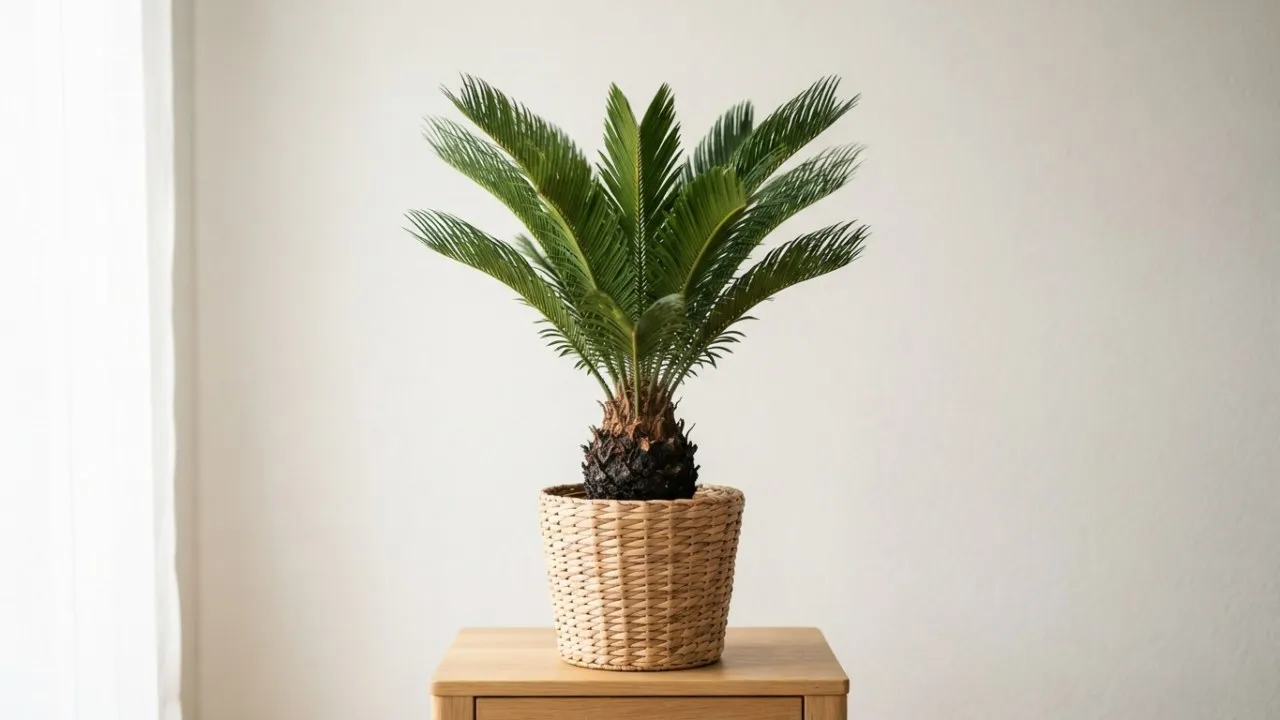
Sago Palm
Cycas revoluta
A living fossil with tough dark green fronds arranged in a symmetrical crown on a stout, scaly trunk.
The essentials at a glance
-
Watering
Every 10 days
-
Light
Full sun
-
Humidity
40–60 %
-
Temperature
5–35 °C


How to care for your Sago Palm
Everything you need to keep your Sago Palm healthy: watering, light, humidity, feeding, repotting and pruning.
Cycas revoluta is a fascinating primitive plant native to southern Japan, often confused with a palm but actually belonging to the order Cycadales, a plant group over 200 million years old. Its stout, scaly trunk supports a majestic crown of rigid, glossy pinnate fronds. Its growth is extremely slow but it can live over a century. Caution however: all parts of Cycas are highly toxic, particularly to domestic animals.

Watering your Sago Palm
Every 10 days
Water when the substrate is dry in the top 3–4 cm. Cycas is sensitive to overwatering which causes trunk rot. Reduce significantly in winter.
How to know it needs water
- Substrate dry 3–4 cm deep
- Fronds appearing less rigid
- Pot lighter

How much light a Sago Palm needs
Full sun
Bright to full sun. At least 4–6 hours of direct sunlight daily for healthy growth. Can be moved outdoors in summer. Tolerates partial shade but grows very slowly.
- Direct sun tolerated
- 4 to 8 h a day
- Orientations that suit it
- South, South-east, South-west, East, West, North-east, North-west

Humidity and misting
40–60 %
Moderate (40–60%). Tolerates some atmospheric dryness but prefers moderate humidity. Mist the foliage occasionally to clean the fronds and maintain adequate humidity, especially indoors.

Feeding and fertiliser
Every 30 days
Fertilize monthly from spring to autumn. Cycas is sensitive to manganese deficiency (yellowing of new fronds). Excess fertilizer is harmful.
- Recommended feed
- Palm or foliage plant fertilizer with micronutrients, particularly magnesium and manganese. · 8-2-12

Repotting your Sago Palm
Every 36 months
Very slow-growing, repot rarely. Use a heavy, stable pot. Very well-draining substrate: potting soil, sand, perlite, and gravel. Do not plant the trunk deeper than before. Offsets at the base can be separated for propagation.
- When
- Spring
- Potting mix
- Cactus and succulent mix
- Mix in
- perlite, coarse sand, pumice
The tell-tale signs
- Roots very compacted in the pot
- Trunk taking up too much space relative to the pot
- Substrate very degraded

Pruning your Sago Palm
Only to remove brown and dry fronds. Cut dead fronds at the base with clean secateurs. Never cut green fronds even if they are yellowing — they still nourish the plant. Always leave at least one complete row of green fronds.

Through the year
Watering is not set once and for all: it follows the light and the growth. Allow 15 days between waterings in the depth of winter, against 8 in the growing season.
- 15 J
- 15 F
- 12 M
- 9 A
- 8 M
- 8 J
- 8 J
- 8 A
- 9 S
- 11 O
- 13 N
- 15 D
Active growth · Days between waterings

Toxicity
Highly toxic to animals and humans. All parts of the plant contain cycasin, a hepatotoxic toxin. Ingestion, even in small amounts, can be fatal to dogs and cats. Extremely dangerous.

Good to know
- Cycas revoluta is not a true palm but a cycad, a group of plants that already existed during the age of dinosaurs over 200 million years ago — it is considered a true living fossil.
- Its growth is extremely slow: it typically produces only one crown of new fronds per year, and its trunk grows only a few centimeters per decade.

Frequently asked questions about the Sago Palm
How do you care for a Sago Palm?
Water it every 10 days. Give it full sun. Ideal humidity: 40–60 %. Ideal temperature: 5–35 °C. Water when the substrate is dry in the top 3–4 cm. Cycas is sensitive to overwatering which causes trunk rot. Reduce significantly in winter.
How often should you water a Sago Palm?
Every 10 days Water when the substrate is dry in the top 3–4 cm. Cycas is sensitive to overwatering which causes trunk rot. Reduce significantly in winter. How to know it needs water : Substrate dry 3–4 cm deep ; Fronds appearing less rigid ; Pot lighter.
How much light does a Sago Palm need?
Full sun Bright to full sun. At least 4–6 hours of direct sunlight daily for healthy growth. Can be moved outdoors in summer. Tolerates partial shade but grows very slowly. 4 to 8 h a day
Is the Sago Palm toxic to cats and dogs?
Yes. Highly toxic to animals and humans. All parts of the plant contain cycasin, a hepatotoxic toxin. Ingestion, even in small amounts, can be fatal to dogs and cats. Extremely dangerous. Keep it out of reach of your pets and call a vet if any is swallowed.
Why are my Sago Palm leaves turning yellow?
Yellowing most often comes from too much water: the mix stays wet and the roots suffocate. Check that the pot drains, empty the saucer, and let the mix dry before watering again. Too little light or a cold draught cause the same symptom.
When should you repot a Sago Palm?
Repot every 36 months, ideally in spring. Very slow-growing, repot rarely. Use a heavy, stable pot. Very well-draining substrate: potting soil, sand, perlite, and gravel. Do not plant the trunk deeper than before. Offsets at the base can be separated for propagation.

At a glance
- Family
- Cycadaceae
- Category
- Palm
- Placement
- Indoor and outdoor
- Mature height
- 1.5 m
- Growth
- Slow
- Temperature
- 5–35 °C
- Pot materials
- terracotta, ceramic, plastic
- Growth
- Reaches maturity in 20 years
These figures are for an average plant. In the app they are recalculated for yours, based on your room, its orientation and the season.
And for your plant, in your home?
In the app this plant becomes yours: a watering schedule tuned to your home, health tracking from photos, and reminders at the right moment.
In the same spirit
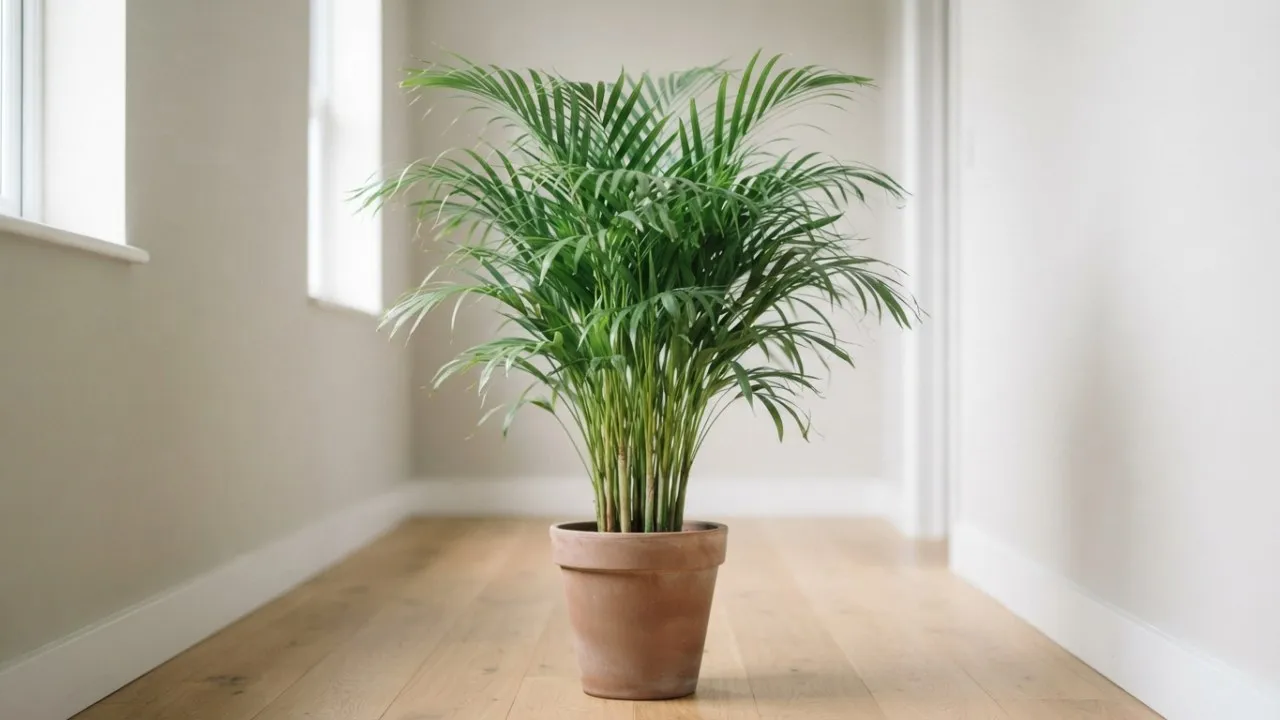 Every 5 days
 Areca Palm
Dypsis lutescens

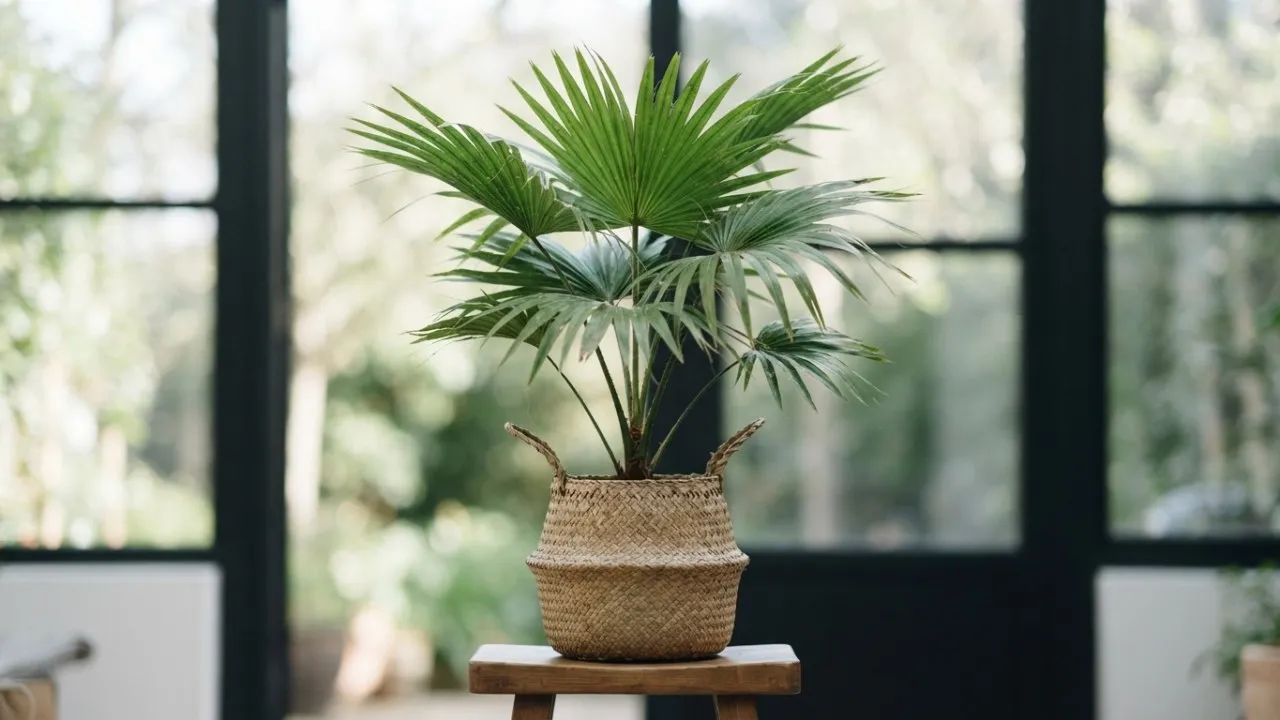 Every 7 days
 Chinese Fan Palm
Livistona chinensis
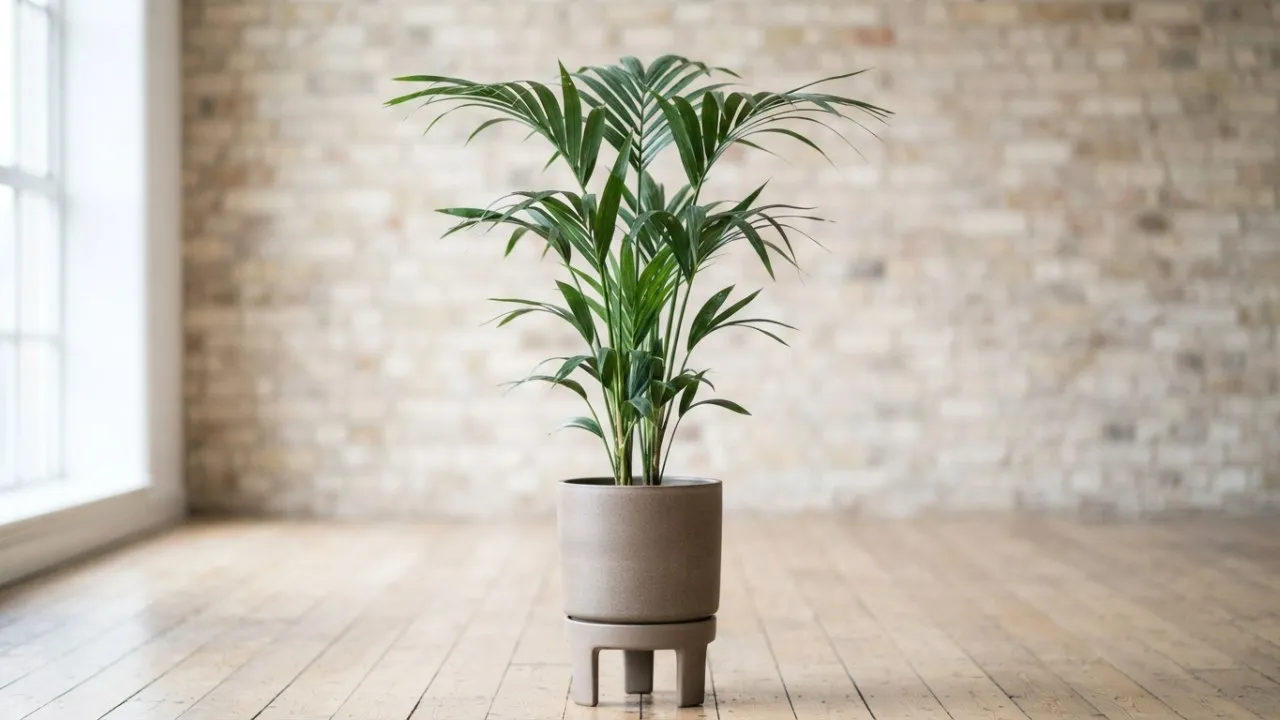 Every 7 days
 Kentia Palm
Howea forsteriana
 Every 7 days
 Lady Palm
Rhapis excelsa