
Annual · Apiaceae
Celery
Apium graveolens
Celery (Apium graveolens) is a biennial plant cultivated as an annual for its crisp, edible leaf stalks. It thrives in cool, moist conditions.
- Every 2 daysWatering
- Full sunLight
- 60–75 %Humidity
- 10–24 °CTemperature


How to care for your Celery
Everything you need to keep your Celery healthy: watering, light, humidity, feeding, repotting and pruning.
Apium graveolens, commonly known as celery, is a member of the Apiaceae family, native to marshy places in Europe and Asia. It is widely cultivated for its long, fibrous stalks, leaves, and hypocotyl. Celery is a cool-season crop that requires consistent moisture and rich, well-draining soil to produce tender, flavorful stalks. Young plants are frost tender, so plant them out after the last frosts; a long cold spell can make the plant run to seed. It is typically grown outdoors in gardens or deep containers, completing its life cycle within one growing season when cultivated for its stalks.

How to recognise Celery
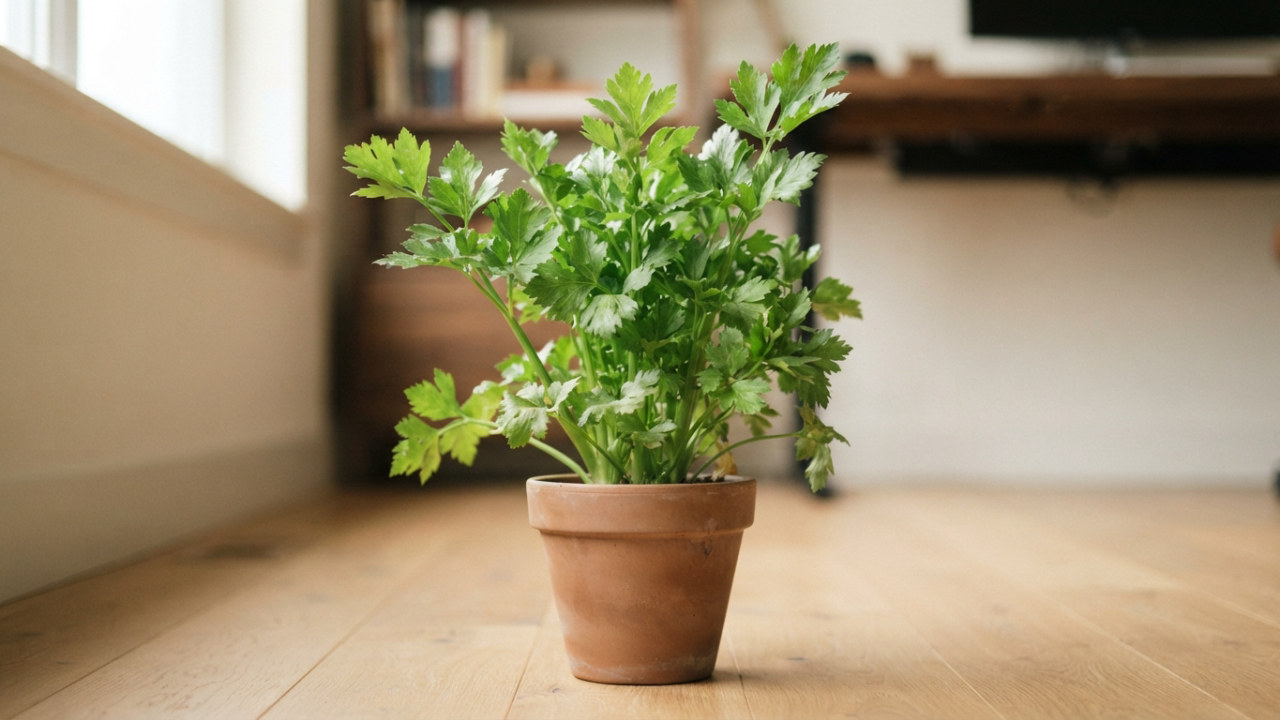
Celery is a stout, upright biennial grown as an annual, with pale to mid green, deeply ribbed, fleshy stalks topped by glossy, toothed, divided leaflets that smell strongly of celery when crushed. It is often mistaken for flat-leaf parsley, which has thin, smooth stalks, for lovage, a much taller perennial with a stronger smell, and, in the wild, for hemlock water dropwort, a deadly poisonous plant. Never eat a wild plant you have not identified for certain.

Watering your Celery
Every 2 days
Keep the soil consistently moist but not waterlogged, and never let it dry out: dry spells give hollow, stringy stalks. Water thoroughly when the top 1 to 2 cm of soil begins to dry.
How to know it needs water
- Soil surface dry to the touch
- Leaves appear slightly limp
- Stalks feel less firm

How much light a Celery needs
Full sun
Full sun in cool climates, with light afternoon shade in hot ones; at least 6 hours of direct sunlight daily for best growth.
- Direct sun tolerated
- 6 to 10 h a day
- Orientations that suit it
- South, South-east, South-west, East, West

Humidity and misting
60–75 %
High (60-75%) Misting is not needed for outdoor celery; avoid wetting the foliage in the evening, which invites leaf spot.

Feeding and fertiliser
Every 14 days
Apply every 2 weeks from May to August. Celery is a hungry crop, so ease off only if you use rich compost.
- Recommended feed
- Balanced NPK liquid fertilizer or organic compost tea · 8-10-8

Repotting your Celery
Celery is grown from seed or small starts and transplanted only once. Plant out in spring, after the last frosts, into rich, organic soil in the garden or a deep pot (30 cm or more), disturbing the roots as little as possible. No further repotting is needed.
- When
- Spring
- Potting mix
- All-purpose potting mix
- Mix in
- coco fibre, vermiculite
The tell-tale signs
- Seedlings have outgrown their starter pot
- Plant appears stunted despite adequate care
- Soil in the pot dries out very quickly after watering

Pruning your Celery
Remove yellowing, damaged, or outer stalks as needed throughout the growing season. Cut cleanly at the base of the stalk with sterilised scissors or a sharp knife.

Through the year
Watering is not set once and for all: it follows the light and the growth. Allow 4 days between waterings in the depth of winter, against 1 in the growing season.
- 3 J
- 2 F
- 2 M
- 2 A
- 1 M
- 1 J
- 1 J
- 2 A
- 2 S
- 2 O
- 3 N
- 4 D
Active growth · Days between waterings

Good to know
- Celery stalks are composed of about ninety-five percent water.
- Wild celery ancestors have been used medicinally for centuries.
- Garlands made with celery leaves were found in the tomb of Tutankhamun.

Frequently asked questions about the Celery
How do you care for a Celery?
Water it every 2 days. Give it full sun. Ideal humidity: 60–75 %. Ideal temperature: 10–24 °C. Keep the soil consistently moist but not waterlogged, and never let it dry out: dry spells give hollow, stringy stalks. Water thoroughly when the top 1 to 2 cm of soil begins to dry.
How often should you water a Celery?
Every 2 days Keep the soil consistently moist but not waterlogged, and never let it dry out: dry spells give hollow, stringy stalks. Water thoroughly when the top 1 to 2 cm of soil begins to dry. How to know it needs water : Soil surface dry to the touch ; Leaves appear slightly limp ; Stalks feel less firm.
How much light does a Celery need?
Full sun Full sun in cool climates, with light afternoon shade in hot ones; at least 6 hours of direct sunlight daily for best growth. 6 to 10 h a day
Is the Celery toxic to cats and dogs?
No, the Celery is not listed as toxic to cats and dogs. That is still no reason to let your pets chew on it.
Why are my Celery leaves turning yellow?
Yellowing most often comes from too much water: the mix stays wet and the roots suffocate. Check that the pot drains, empty the saucer, and let the mix dry before watering again. Too little light or a cold draught cause the same symptom.
When should you repot a Celery?
Repot , ideally in spring. Celery is grown from seed or small starts and transplanted only once. Plant out in spring, after the last frosts, into rich, organic soil in the garden or a deep pot (30 cm or more), disturbing the roots as little as possible. No further repotting is needed.

At a glance
- Family
- Apiaceae
- Category
- Annual
- Placement
- Outdoor
- Mature height
- 60 cm
- Growth
- Moderate
- Temperature
- 10–24 °C
- Pot materials
- terracotta, ceramic, plastic, fabric
These figures are for an average plant. In the app they are recalculated for yours, based on your room, its orientation and the season.
And for your plant, in your home?
In the app this plant becomes yours: a watering schedule tuned to your home, health tracking from photos, and reminders at the right moment.
In the same spirit
 Every 2 days


Busy Lizzie
Impatiens walleriana

 Every 3 days
Fairy Primrose
Primula malacoides
 Every 2 days
Million Bells
Calibrachoa hybrida
 Every 3 days
New Guinea Impatiens
Impatiens hawkeri
