Guides
 Anthurium: the complete guide to the flamingo plant
Red, pink, white spathes: why your Anthurium stops blooming and how to get it flowering again.
 Plenova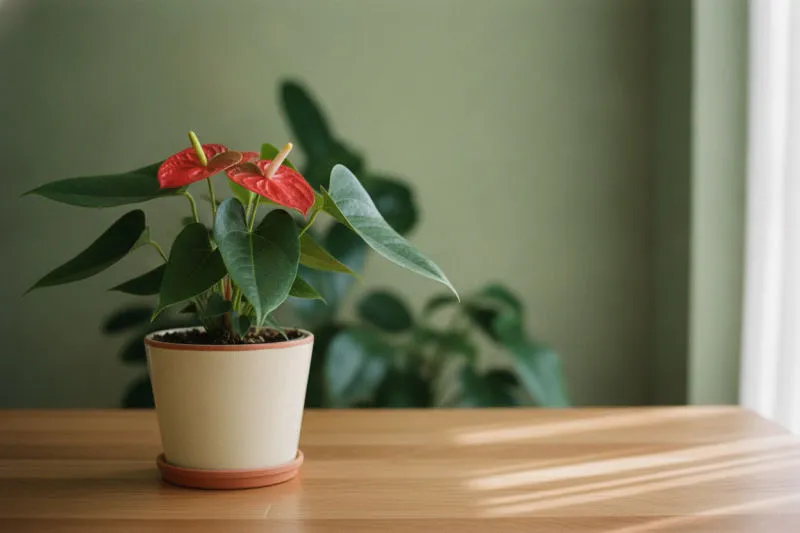
Contents 13
Anthurium is the plant with shiny red heart-shaped spathes. We see it everywhere, it keeps coming back as a gift, and it often ends up losing its flowers and never blooming again. Yet it can flower almost year-round when treated right. Here is how.
What it is
Anthurium covers about 1,000 species, native to American tropical forests. Family Araceae, like Monstera and pothos.
As with the peace lily, what we call a flower is actually a spathe (a large colored petal) wrapping the spadix (the central stalk holding the actual tiny flowers).
Varieties to know
Anthurium andraeanum (flowering)
The classic. Red, pink, white spathes, sometimes bicolor. Flowers year-round when well cared for.
Anthurium scherzerianum
Variant with a wavy spathe and a spiraled orange spadix. Rarer, blooms less often.
Anthurium clarinervium
Foliage variety. Large velvety dark-green leaves, strongly marked silver veins. Very on trend, rarely blooms indoors.
Anthurium crystallinum
Clarinervium cousin, even larger leaves, broader veins. Pure spectacle.
Anthurium magnificum
Elongated black-velvet leaves, silver veins. A collector favorite.
Light
Ideal: bright indirect light. Near an east window, or 3 ft from a south one through a sheer.
Tolerates: relative dim light for foliage varieties. Flowering ones need more light to rebloom.
Avoid: prolonged direct sun.
To make your Anthurium rebloom: light is the number-one factor. A plant in dim light makes leaves, not flowers.
Watering
Anthurium likes substrate regularly moist but never soaked.
Rhythm:
- Summer: every 5-7 days.
- Winter: every 10-12 days.
Method: check the top inch with a finger. Dry: water. Moist: wait. Drain fully.
Filtered or rainwater ideally, hard tap water browns leaf tips.
Substrate
Aroid mix (potting + bark + perlite + charcoal) or DIY:
- 40% green-plant mix
- 30% pine bark
- 20% perlite
- 10% horticultural charcoal
Anthurium is epiphytic in the wild. It grows clinging to trees, its roots want air.
Pot
Pot with generous drainage. Not too big: Anthurium blooms better when slightly snug. Pot just an inch wider than the root ball.
Fertilizer
During growth and bloom (spring-summer): fertilizer for flowering plants (rich in phosphorus) every two weeks, half-diluted. None in winter.
Triggering reblooming
Key conditions:
- Bright indirect light: factor number one.
- Bloom fertilizer regularly from April to September.
- Ambient humidity 50%+ ideally.
- Tight pot: do not over-size.
- Cool spell in winter (60-65°F at night) can help trigger.
Cut spent flowers at the base of the stalk to stimulate new spathes.
Toxicity
Anthurium is toxic to cats, dogs, and humans if ingested. Calcium oxalate crystals irritate mouth and throat. Place high if curious cats.
Propagation
By division: in spring during a repot. A mature plant forms natural clumps.
By cutting: possible but slow. Cut a stem with aerial roots, root in moist sphagnum, wait 2 months for soil-ready roots.
Common problems
- Brown tips — Hard water or dry air → Filtered water, mist
- Yellow leaves — Overwatering → Reduce watering
- Green or small spathes — Lack of bloom fertilizer → Phosphorus fertilizer
- No flowering — Lack of light → Move closer to a window
- Wilted leaves — Lack of water OR rotted roots → Check substrate
- Black spots — Root rot → Repot dry
Anthurium and air quality
Anthurium is one of the more effective plants at absorbing ammonia (found in some cleaners and new furniture). Real but modest effect.
With Plenova
Plenova distinguishes flowering varieties (andraeanum) from foliage ones (clarinervium, crystallinum) and adapts advice. For flowering varieties, the app suggests the right fertilizer at the right time.
A settled Anthurium blooms 8 to 10 months out of 12. More generous than a bouquet renewed weekly. And incomparably more durable.
Found this useful? Pass it on.
 Guides 8 min
  Guides
 June 27, 2026
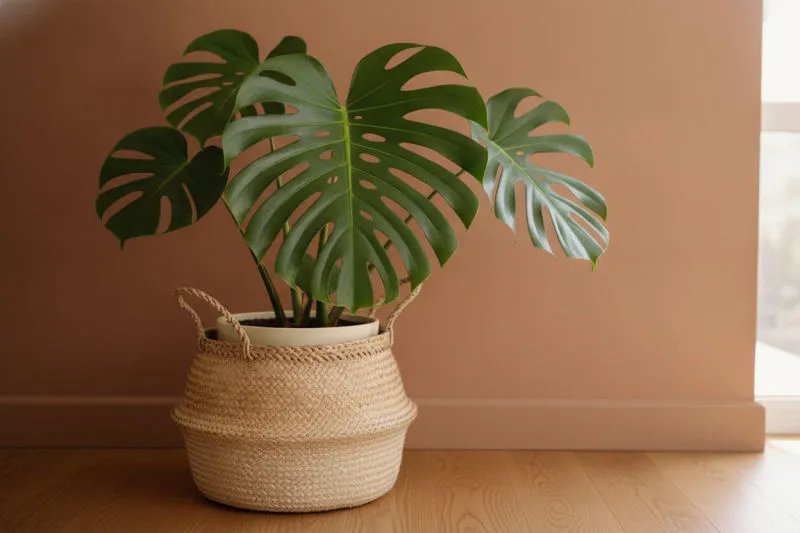
Caring for your Monstera, the guide to those iconic split leaves
Monstera deliciosa is the houseplant of the decade. Light, water, fenestration, aerial roots: here is how to turn yours into a real indoor jungle.
Read the article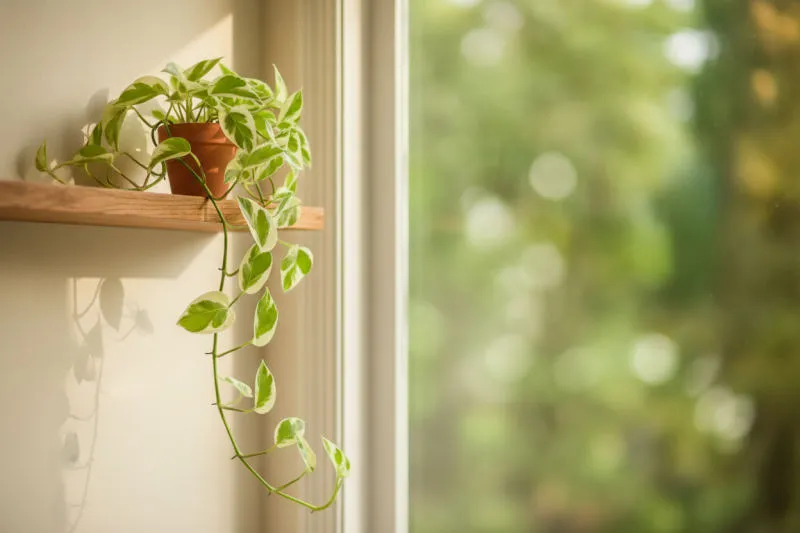 Guides 6 min
 June 26, 2026
Pothos, the complete guide: varieties, care and propagation
Golden, Marble Queen, Neon, N'Joy: everything you need to know about pothos, the most popular houseplant in the world.
Read the article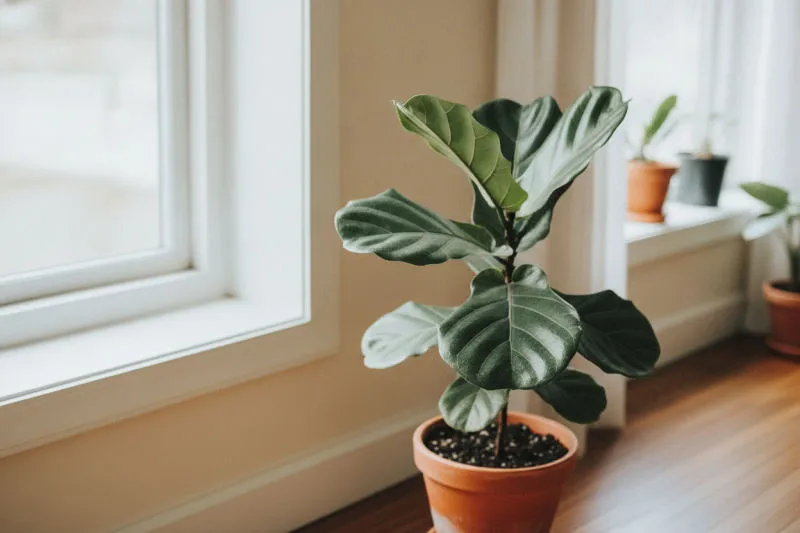 Guides 9 min
 June 25, 2026
Caring for your Ficus, lyrata, benjamina or rubber tree
Ficus is a whole genus, not one plant. Light, water, latex sap, pruning: a guide to figuring out your variety and keeping it beautiful for years.
Read the article