
 Pests
Pests Aphids
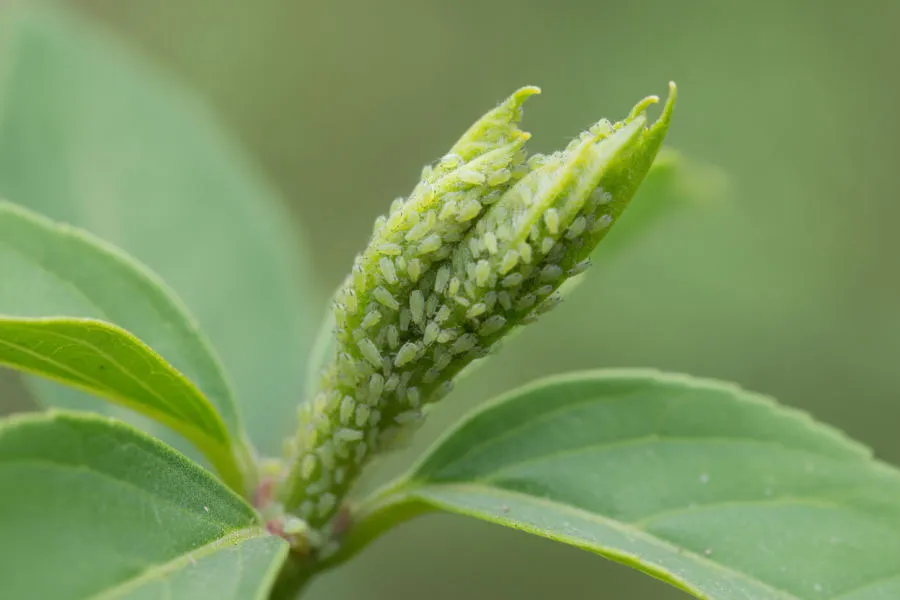
Clusters on new growth
Small pear-shaped insects, usually clustered on new growth.
Also called: aphidsgreenflyhoneydewants

Severity
Keep an eye on it
Deal with it this week, before it spreads.
Parts affected
- Leaves
- Stems
- Flowers
- Fruit
- Roots
- Soil
Family

Pests
From insects to larvae: spot them early to get rid of them fast.
Understand
What is happening inside the plant
Aphids are sap-sucking insects one to four millimetres long that feed on soft tissue.
By draining sap they weaken the plant and can transmit disease. The surplus sugar is excreted as honeydew, a sticky substance that encourages a black fungus called sooty mould, which limits photosynthesis. A colony reproduces without mating and doubles in days: one colony ignored for a week covers the whole plant.
Check
How to be sure
Tick what you can see on your plant.
Tick the signs you can see and the gauge will add them up.
Some signs match. If the rest does not fit, look at the related problems further down.
Most of the signs match: this is very likely it. What to do
Signs and causes
What you see, and why
Symptoms
- Clusters of small green, black or pink insects on new growth
- New leaves curled and distorted
- Young fruit distorted and coated in sticky honeydew
- Sticky honeydew, sometimes with ants in attendance
Causes
- Arrived through an open window or on a plant brought indoors
- Excess nitrogen producing soft new growth
What to do
The action plan
In order. Tick each step once it is done.
0/3 done
-
Wash the colonies off with tepid water; that is often enough.
-
Pinch out the worst-affected tips.
-
Repeat every two days until they are gone.
Prevent
Stopping it coming back
-
Inspect new growth weekly in spring.
-
Go easy on high-nitrogen fertilisers.
Questions
Common questions
Is a jet of water enough?
On an early colony, often yes: dislodged aphids do not climb back. Repeat every three days for two weeks.
Do ladybirds work?
Outdoors and under glass, very well. Indoors they head for the window and escape before doing the job.
Why are they always on the new growth?
Because the sap is richest there and the skin thinnest. That is also where to look first at every inspection.
 Urgent
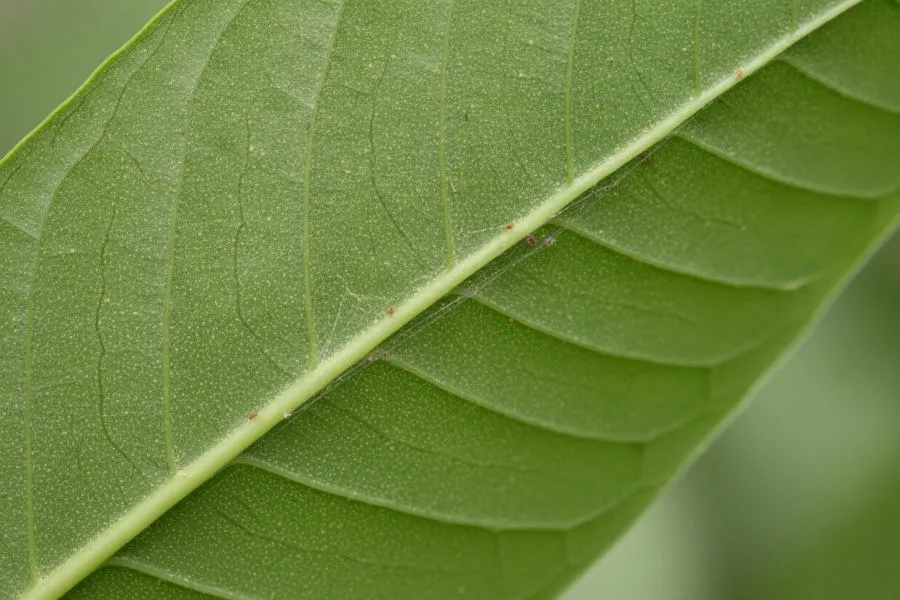
 Fine webbing, yellow speckling
Very fine webbing appears under the leaves, which take on a yellow stippling.
Causes and fixes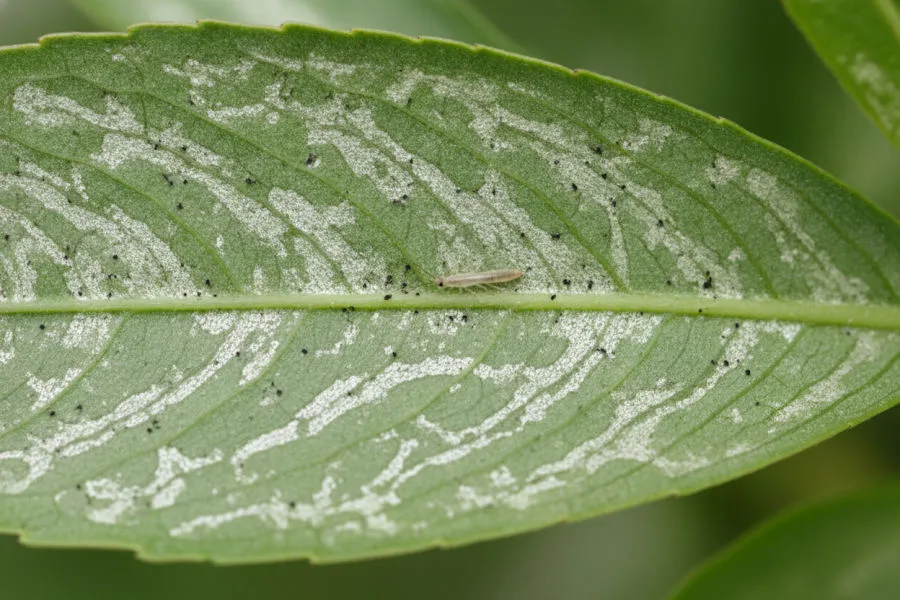 Keep an eye on it
 Silvery streaking
Tiny insects leaving silvery streaks and black specks on the leaves.
Causes and fixes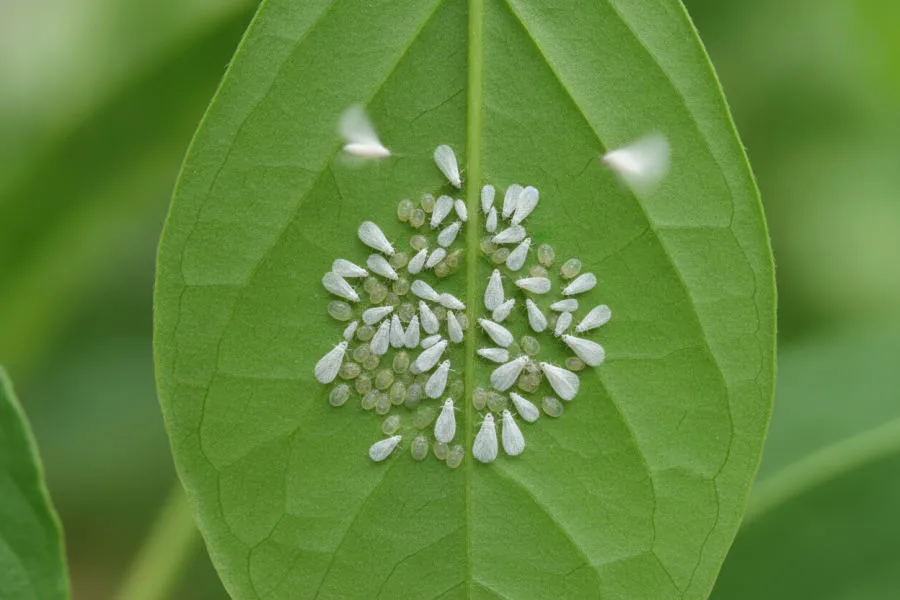 Keep an eye on it
 Cloud of white insects
A cloud of white insects takes off when you shake the plant.
Causes and fixes