Round-ups
 Climbing houseplants, six species and the right support to grow them
Pothos, Monstera, Philodendron, Hoya: how to make your houseplants climb, pick the right pole, and turn them into a wall of green.
 Plenova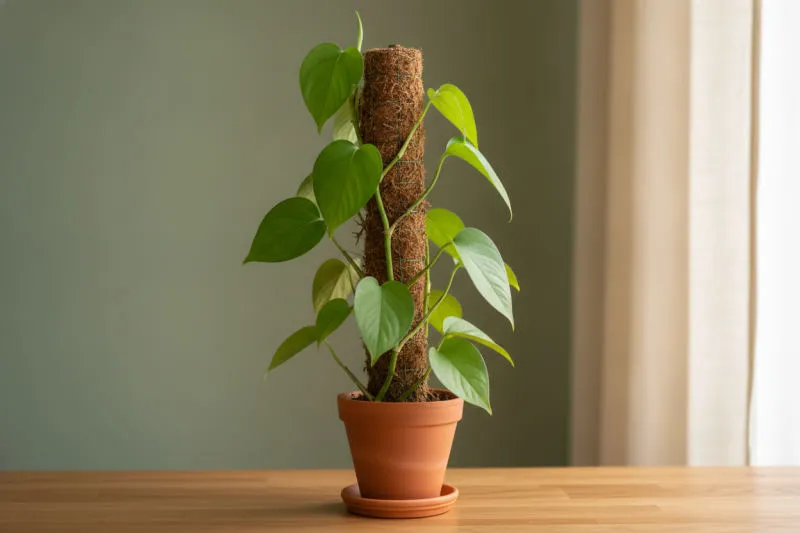
Contents 8
A climbing plant transforms an interior. Leaves grow larger, the plant gains height, and the visual effect has nothing to do with the same plant sitting in a corner. The trick is to pick a species that wants to climb, and give it what it needs to do so.
Quick recap
- Six solid species: Monstera, heartleaf Philodendron, Pothos, Hoya, Scindapsus, Syngonium.
- The support that changes everything: a sphagnum moss pole, far better than a plain stake.
- Why it works: aerial roots grip a moist support, and the plant senses it can climb.
- Bonus: bigger leaves, fenestration on Monsteras.
Why a plant climbs (or does not)
Climbing plants use three techniques:
- Aerial roots (Monstera, Philodendron, Pothos): they cling to a support like a tree trunk.
- Tendrils (indoor passionflower): they wrap around anything they touch.
- Twining stems (Hoya): the stem coils around a support as it grows.
Without a support, these plants survive but stay flat or trail down. With one, they climb.
The six standouts
1. Monstera deliciosa
The star. With a moss pole, its leaves go from the size of a hand to the size of a face, and they start to split and develop holes.
Without a pole, it stays flat and leaves stay small. The difference over two years is dramatic.
2. Heartleaf Philodendron
Easy climber by definition. Small heart-shaped leaves, fast growth, dim-light tolerant. Perfect to start with.
3. Golden Pothos
The ideal compromise: you can train it on a pole or let it trail from a shelf. With a moss pole, its leaves get bigger and more variegated.
4. Hoya carnosa
Twining climber. Stems coil naturally around a support. Fleshy leaves, fragrant umbel flowers. More demanding on light.
5. Scindapsus pictus
A pothos cousin with gray-green foliage flecked with silver white. 'Argyraeus' or 'Exotica' varieties. Decorative either trailing or climbing.
6. Syngonium podophyllum
Arrowhead leaves, white at first, turning green as they mature. Loves climbing, stems trail or grip. Pink varieties ('Pink Allusion', 'Neon') are very on trend.
The ideal support: moss
The secret is the moss pole, also called a totem or stake. A pole wrapped in sphagnum kept moist. Aerial roots embed into the moss like a tree trunk.
Why it works better than a plain stake:
- Moist surface for the aerial roots.
- Stores water that aids growth.
- Mimics tree bark, a hormonal signal of maturity.
How to set it up:
- Buy one or DIY (a wire mesh tube filled with sphagnum).
- Plant in the center of the pot, two inches from the rim to avoid tearing roots.
- Tie the first stems gently to the pole with soft garden ties.
- Mist the pole two or three times a week to keep it moist.
Within weeks, aerial roots grip on their own. No more tying.
Alternatives to the moss pole
- Wall trellis: anchored to the wall, train the stems. Beautiful effect.
- Bamboo hoop: for Hoyas, train the stem in a circle.
- Wall or woven panel: the plant holds itself on the pattern.
- Tensioned cable: between two points, ideal for twiners.
Common mistakes
Pole too short: the plant reaches the top and stalls. Plan a modular pole, or replace it.
Dry pole: forget to mist and the aerial roots will not grip. Three times a week minimum in winter, more in summer.
Forcing it too early: do not push a plant that has no developed aerial roots yet. Wait a few months.
Wrong species: an upright Philodendron (like Philodendron 'Birkin') does not climb. Check before buying.
How long for an effect
- 3 months: the plant starts gripping.
- 6-12 months: bigger leaves, first real visual effect.
- 2 years: full transformation, a green wall for a Monstera.
Plenova and climbers
Plenova identifies the species of your pothos, Philodendron or Monstera from a photo, and times its watering and misting reminders to its needs.
A plant that climbs adds a whole new dimension to your space. Literally.
Found this useful? Pass it on.
 Round-ups 9 min
  Round-ups
 June 22, 2026
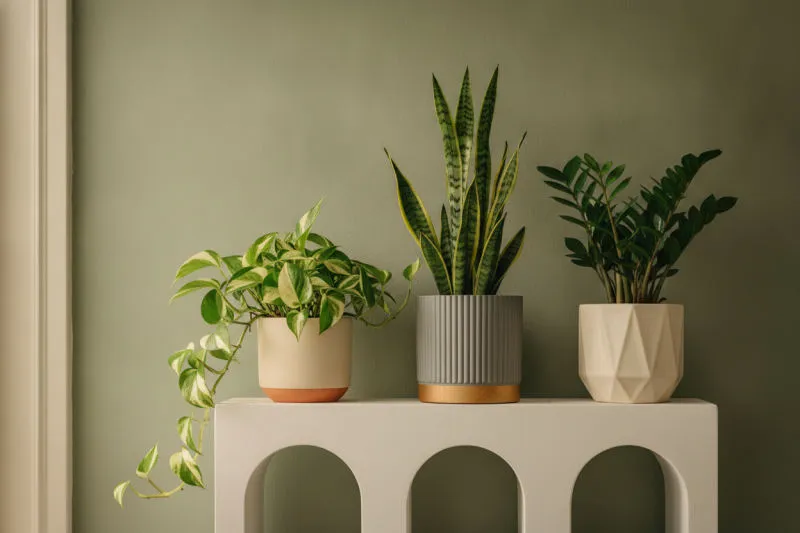
The best plants for beginners, six species that forgive your slip-ups
You want a bit of green at home without losing your mind over it. Here are six low-key plants, what they actually need, the mistakes to avoid.
Read the article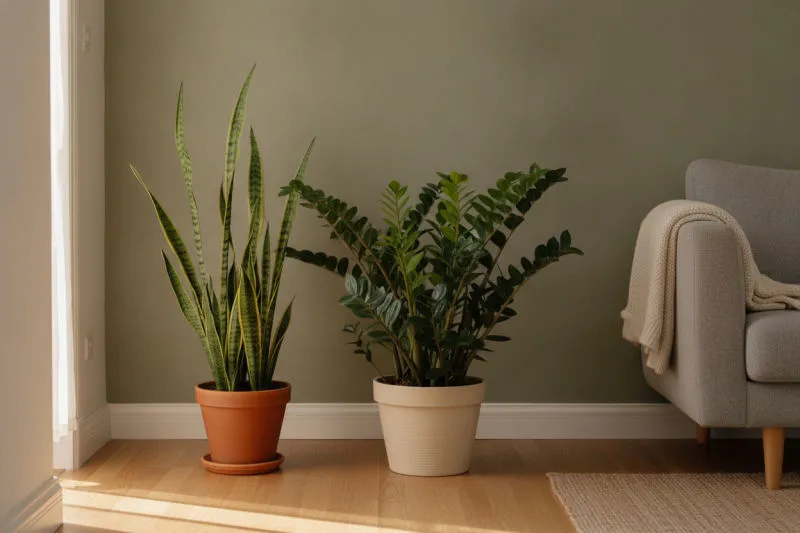 Round-ups 5 min
 June 21, 2026
Low-maintenance houseplants: eight species that forgive neglect
No time, no patience, sometimes a faulty memory: eight indoor plants that survive almost anything without complaining.
Read the article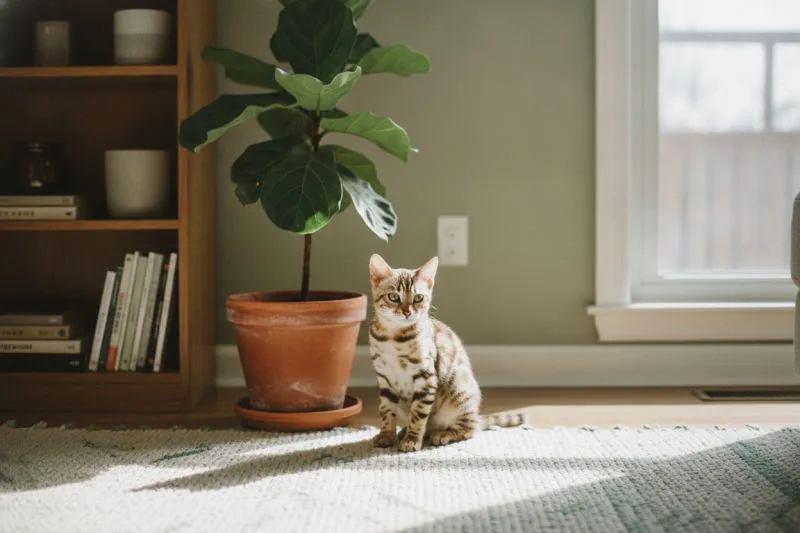 Round-ups 6 min
 June 6, 2026
Pet-safe houseplants for cats and dogs, the reliable list
Got a curious cat or dog? Here are the indoor plants you can welcome safely, and the ones to avoid at all costs.
Read the article