Care
Care Which soil for which plant, the practical guide
Indoor potting mix, cactus blend, orchid bark: which substrate for which plant. With homemade recipes that work.
 Plenova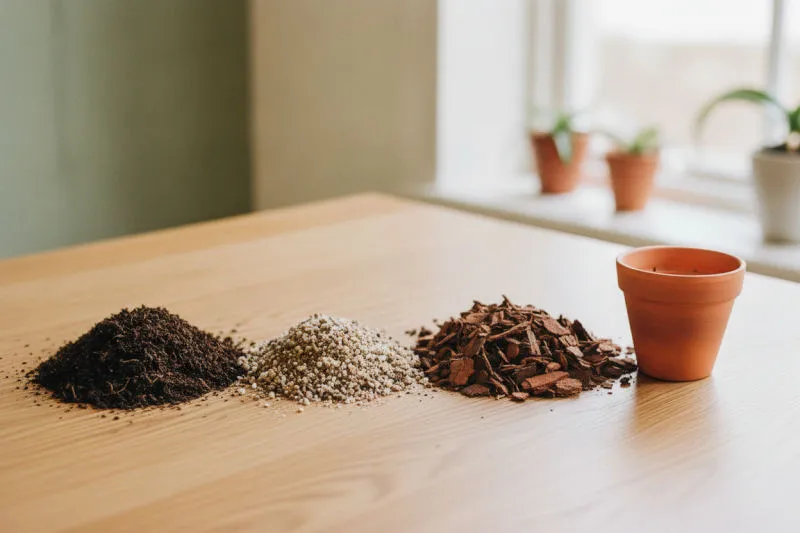
Contents 11
- 01 The base ingredients
- 02 For classic green plants
- 03 For cacti and succulents
- 04 For Phalaenopsis orchids
- 05 For ferns and forest-floor plants
- 06 For Mediterranean plants
- 07 For seedlings and cuttings
- 08 For carnivorous plants
- 09 Common pitfalls
- 10 Spotting a good substrate
- 11 Which bag to buy at the garden center
The substrate is not a detail. It holds water, supplies nutrients, and either lets the roots breathe or suffocates them. Picking the right mix cuts future problems in half. Here it is by plant category.
The base ingredients
Before recipes, know what is in the bag.
- Indoor potting mix: the base. Peat + compost + organic matter. Holds water and nutrients.
- Perlite: small white volcanic beads. Lightens, drains, brings nothing nutritive.
- Pumice: porous volcanic rock. Drainage and aeration.
- Composted pine bark: airy structure, holds little water.
- Sphagnum moss: dried moss, holds tons of water.
- Horticultural sand: pure drainage, brings nothing.
- Horticultural charcoal: antifungal, use a pinch.
- Vermiculite: holds water and nutrients, lightens.
For classic green plants
Pothos, Philodendron, Monstera, Calathea, peace lily: indoor potting mix 60% + perlite 30% + bark 10%.
Airy, drains well, holds enough water so you do not water every two days. The all-purpose mix that fits 80% of houseplants.
For cacti and succulents
Store cactus mix, OR homemade: potting mix 30% + horticultural sand 30% + perlite 30% + pumice 10%.
Water should run through in seconds. If the mix holds moisture more than 24 hours, add more perlite or sand. These plants rot in weeks in a too-rich substrate.
For Phalaenopsis orchids
Never standard potting soil. An orchid grows in the wild attached to trees, its roots want air. The right mix: composted pine bark 70% + sphagnum 20% + horticultural charcoal 10%.
Sold ready-made at garden centers as "orchid mix". Refresh every 2-3 years as the bark breaks down.
For ferns and forest-floor plants
Calathea, Boston fern, Asplenium: indoor potting mix 50% + sphagnum 25% + perlite 15% + bark 10%.
Sphagnum keeps the humidity these plants love. Without it, the substrate dries too fast and foliage browns.
For Mediterranean plants
Lavender, rosemary, citrus: potting mix 50% + sand 30% + perlite 20%. A free-draining substrate that mimics their native soil. Avoid pure potting mix, too wet.
For seedlings and cuttings
Store seed-starting mix, or perlite 50% + vermiculite 50%. Airy, holds humidity, no organic matter that could rot before rooting.
For carnivorous plants
Special case. No regular soil at all, that is often what kills them. The mix: pure unfertilized peat 70% + perlite 30%, watered only with rainwater or distilled water.
Common pitfalls
Garden soil for indoor plants. Too heavy, too packed, does not drain. Save it for outdoor planters.
Very fine "all-in-one" potting mix. Compacts within months, suffocates roots. Always add perlite (at least 20%).
Reusing substrate from the old pot. The mix is depleted, has lost its structure. Compost it.
Clay pebbles at the bottom. Common practice but often ineffective: creates a stagnant wet layer that can rot roots. A good free-draining substrate plus a drainage hole works better.
Spotting a good substrate
In your hand, it crumbles, does not form a hard ball. At a glance, you see potting bits and lighter pieces of perlite or bark. When watered, water passes through in under 30 seconds and exits the drainage holes.
If your current substrate forms a hard clump, holds water for days, or smells, time to repot in a fresh mix.
Which bag to buy at the garden center
If you do not want to mix yourself, three bags cover 90% of cases:
- Indoor potting mix or "houseplant".
- Cactus and succulent mix.
- Orchid mix.
When you fill in your plant's pot, Plenova points out the substrate that suits its species, avoiding blind purchases. The right substrate means six trouble-free months for most plants.
Found this useful? Pass it on.
 Care 5 min
  Care
Care October 10, 2026
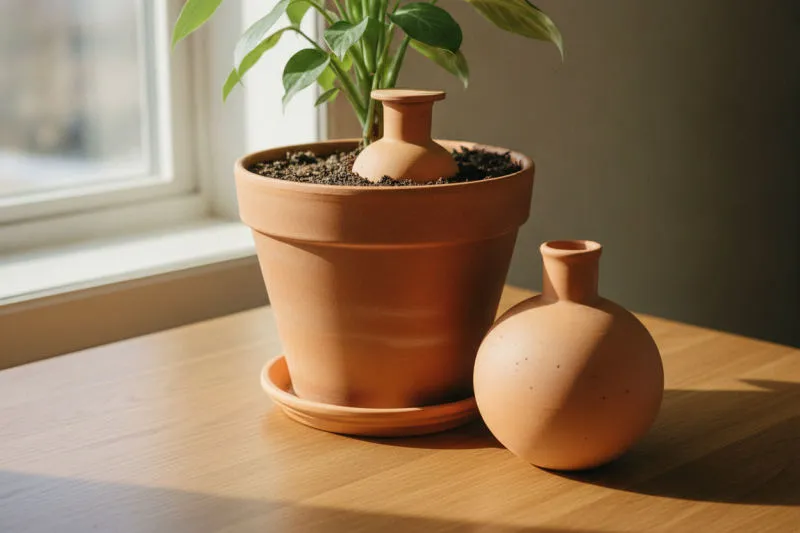
The olla: the clay pot that waters your plants for you
Buried next to a plant and filled with water, an olla releases it into the soil day after day. How it works, which plants it suits, and how to set one up.
Read the article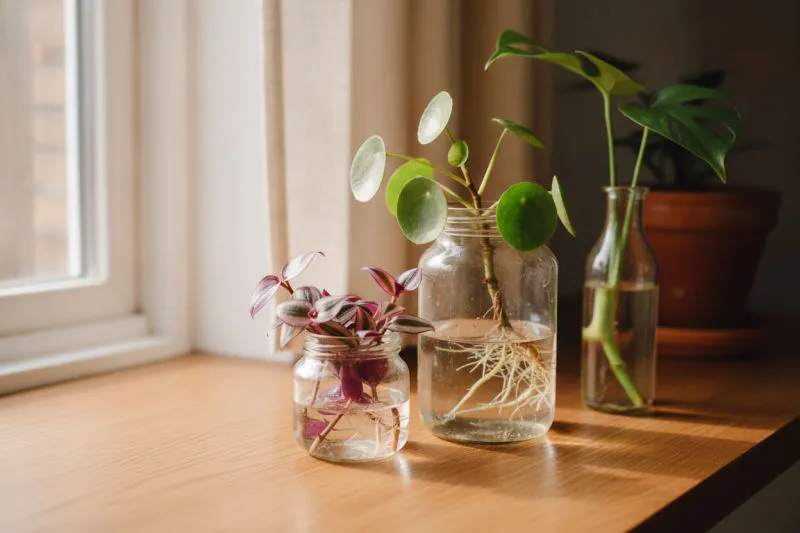 Care 9 min
 June 8, 2026
How to propagate a plant, the complete guide that actually works
Propagation turns a single plant into many. Real methods that work, broken down by species, with no gimmicks.
Read the article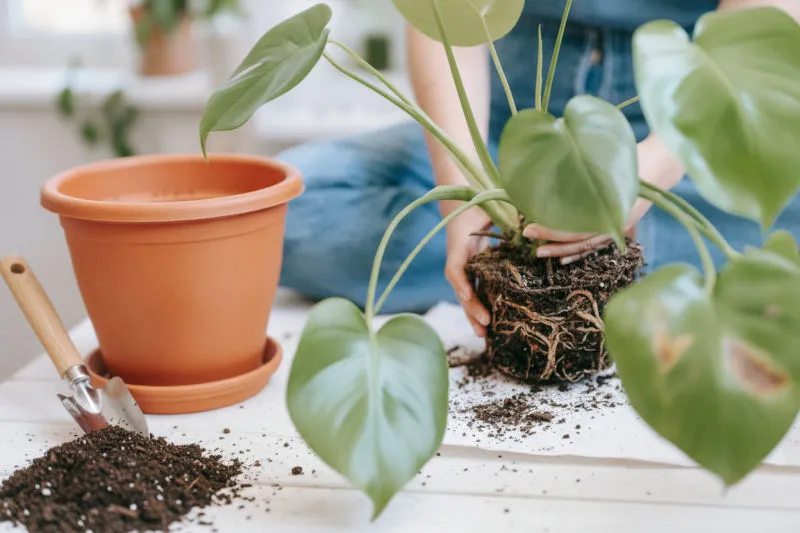 Care 6 min
 June 7, 2026
How to repot a houseplant, step by step
Repotting can transform or kill your plant. Here is the method that works, the right timing, and the mistakes to avoid.
Read the article