Seasonal
 Seasonal plant care calendar, what to do month by month
What to do in January, April, July, or October: a complete care calendar for your houseplants, month by month.
 Plenova
Contents 8
Houseplants follow the seasons even when we picture them cut off from outside. Light, temperature, and humidity all shift through the year, and care has to follow. Here is the complete monthly calendar so you do not miss anything.
The big picture
Two functional seasons from the plant's perspective:
- Growing season: spring + summer. More frequent watering, fertilizer, pruning, repotting.
- Resting season: fall + winter. Reduced watering, no fertilizer, no repotting.
Everything else flows from this logic. Now the details.
Winter, December to February
January
- Cut waterings to the minimum. Once every 3 weeks for most plants, longer for succulents.
- Move plants away from direct heat sources (radiators, fireplaces).
- Air the rooms 5 minutes a day, even in winter, to avoid stagnant humidity.
- Wipe leaves with lukewarm water to remove dust that blocks photosynthesis.
- Watch for pests: dry air is paradise for spider mites and mealybugs.
February
- Still no fertilizer.
- First signs of growth on some plants (young leaves, new stems): normal, daylight returns.
- Prep your gear for spring: pots, substrate, fertilizer.
- Take cuttings if you want, some species restart.
Spring, March to May
March
- Gradually resume waterings based on each plant's needs.
- First repotting of the year if needed (roots out of the pot).
- First fertilizer possible at half-dose, just once this month.
- First shape pruning.
April
- Peak repotting month. Best moment for nearly every species.
- Cuttings: ideal conditions, maximum success rate.
- Fertilize every two weeks for actively growing plants.
- Pinching to encourage branching.
May
- Rotate pots regularly, light coming in at changing angles can tilt the plants.
- Watch for thrips and other spring pests.
- You can take some plants outside (Ficus, palms), gradually acclimating them.
Summer, June to August
June
- Watering at peak, sometimes twice a week for the largest plants.
- Watch evaporation: a terracotta pot outside can dry in a day.
- Morning misting for tropicals.
- Fertilizer still active, half-diluted.
July
- Indoor plants: pull them away from sun-blasted windows between noon and 4 p.m., the rays come through and burn.
- Outdoor plants: watch for sunburn. Mist in the morning, never at noon.
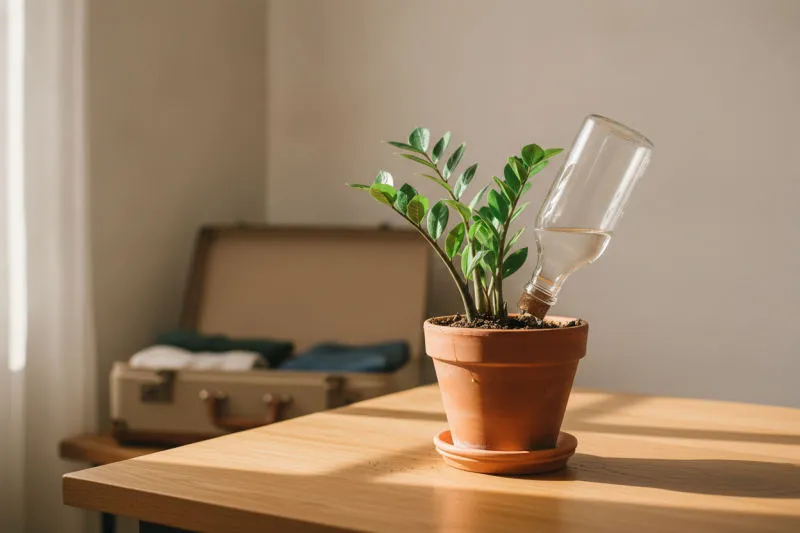
- Plan vacation watering setup based on trip length.
August
- The riskiest period for water shortage. Ask a neighbor if you are gone more than 5 days.
- No repotting in extreme heat, wait until end of month.
- Reduce fertilizer if it is very hot (above 86°F), the plant slows down defensively.
Fall, September to November
September
- Bring back inside the plants that summered outside (they hate nights below 54°F).
- Inspect under each leaf before bringing in: no hitchhiking pests.
- Gradually reduce waterings, growth slows.
- Last pruning of the year possible if needed.
October
- Fully stop fertilizer.
- "Cool snap" mode for orchids: move your Phalaenopsis to a 60-63°F room at night for 3 weeks to trigger the next bloom.
- Clean the foliage. Heating season will bring lots of dust.
November
- Heating turns on: watch ambient humidity drop. Misting or humidifier.
- Space waterings further.
- Watch for first signs of winter stress: yellowing leaves, dry tips.
Recap by season
- Winter: minimum watering, no fertilizer, no repotting, no pruning.
- Spring: regular watering, fertilize every 2 weeks, ideal repotting time, pruning welcome.
- Summer: maximum watering, fertilize every 2 weeks, repotting possible.
- Fall: reduced watering, no fertilizer, bring outdoor plants back in.
Adapt to your home
This calendar is a reference for a temperate apartment. Adjust based on:
- Your climate: in Marseille, spring starts in February. In Minneapolis, in April.
- Your home: a heavily heated apartment in winter needs more water than a cool room.
- The species: a cactus does not follow the same calendar as a Calathea.
Plenova handles timing for you
Plenova automatically adjusts watering and fertilizer reminders by season and species. You stop thinking about the "when", the app does it for you. You just do the action at the right moment.
Following the seasons is the difference between a plant that survives and one that thrives. It is also the natural rhythm that makes plant care so calming: a little each week, never a lot at once.
Found this useful? Pass it on.
 Seasonal 6 min
  Seasonal
 June 24, 2026
How to water your plants while on vacation, six methods that work
Going away for a week, two weeks, or all summer? Here are the best ways to keep your plants alive without a sitter.
Read the article Seasonal 6 min
 May 20, 2026
Overwintering houseplants: what to do (and what to avoid)
Heating, short days, dry air, cold windows: why your plants struggle in winter and how to carry them through without losses.
Read the article