Round-ups
 Best plants for the bedroom, seven choices that help you sleep
Easy plants, no allergy risk, and that won't disturb your sleep: the ideal selection for a bedroom.
 Plenova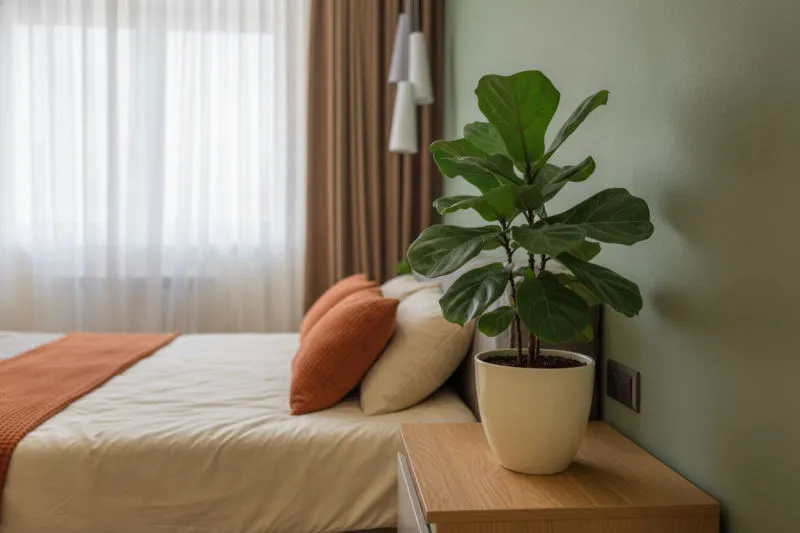
Contents 12
A lot of people still believe you should not have plants in a bedroom, fearing they will starve you of oxygen at night. False idea: a plant's oxygen consumption in a bedroom is negligible. Here are seven worth picking, easy to live with, with no overbearing pollen or heady scent.
What to look for
- Low-allergen plants (little or no pollen).
- Species tolerant of typical bedroom light.
- Not strongly fragrant (gardenia, jasmine), which can disturb sleep.
- Not heavy transpirers (too much humidity in a sleeping room).
1. Snake plant, the champion
The snake plant (Dracaena trifasciata) is the bedroom plant. Its CAM metabolism makes it very frugal with water, and it makes do with almost nothing.
Tolerates dim light, dry air, missed waterings. Truly the simplest option.
2. Aloe vera
Like snake plants, aloe vera is a succulent with CAM metabolism, very frugal with water. Bonus, its gel works on minor burns.
Bright light ideally (near a window), spaced waterings.
3. Peace lily
Spathiphyllum tolerates dim light and cleans the air by absorbing formaldehyde and ammonia. Its elegant white blooms add a sense of calm to the room.
Keep substrate slightly moist. Toxic to cats if ingested, place high if needed.
4. Golden Pothos
Pothos absorbs volatile organic compounds (paint, new furniture) and grows anywhere, even in a dim bedroom. Its trailing shape softens the look of the room visually.
5. Potted lavender
For the calming side, potted lavender is interesting. Its scent has documented relaxing effects and helps with falling asleep. Needs a lot of light, place near a window.
6. Spider plant
Tolerates everything, captures formaldehyde, makes pups. Variegated forms available. Low allergen.
7. Aglaonema
For dim bedrooms, in a green or silver variety. The reds and pinks need brighter indirect light. Tolerates neglect, indifferent to ambient humidity.
How many plants to add
Simple rule: never more than you can take care of. Three to five plants in a standard bedroom is plenty.
Practical tips:
- One plant per square meter at most on the floor.
- Hang or use shelves to keep the surfaces clear.
- Air the bedroom 10 minutes in the morning, like every room.
What to avoid in a bedroom
- Strongly scented plants (gardenia, jasmine, Mexican orange): can disrupt sleep.
- Pollen plants (seasonal flowering plants): allergy risk.
- Spiky cacti: safety hazard if you get up at night.
- Heavy transpirers (Areca, large ferns): add humidity, not ideal in an already humid bedroom.
The closed-bedroom myth
A plant in a closed bedroom at night does not make the air dangerous. Becoming problematic would require dozens of plants in a sealed room, which never happens in normal conditions. So sleep peacefully with your snake plants and pothos.
Tracking with Plenova
Each card in the Plenova catalog gives the species' light needs and toxicity: enough to choose your bedroom plants and rule out the ones to avoid if your cat sleeps on the bed.
A bedroom with a few green plants is a slightly better night's sleep without realizing it, and a wake-up with a bit more life around you.
Found this useful? Pass it on.
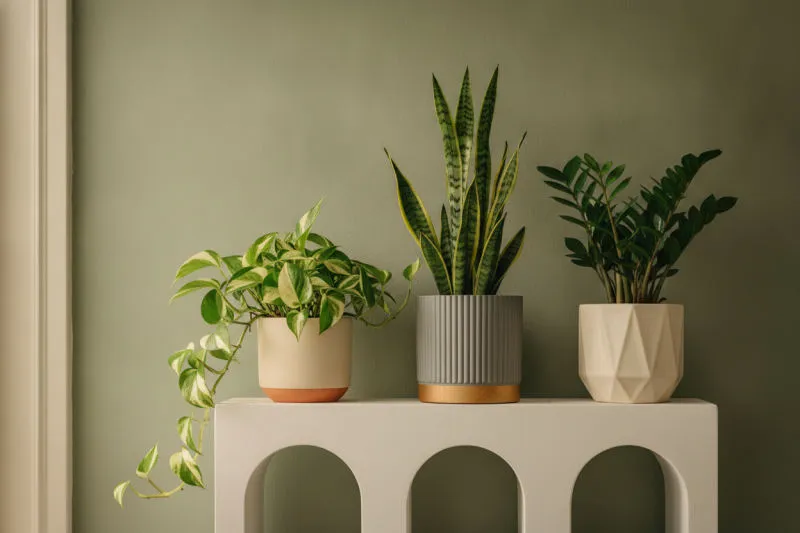 Round-ups 9 min
  Round-ups
 June 22, 2026
The best plants for beginners, six species that forgive your slip-ups
You want a bit of green at home without losing your mind over it. Here are six low-key plants, what they actually need, the mistakes to avoid.
Read the article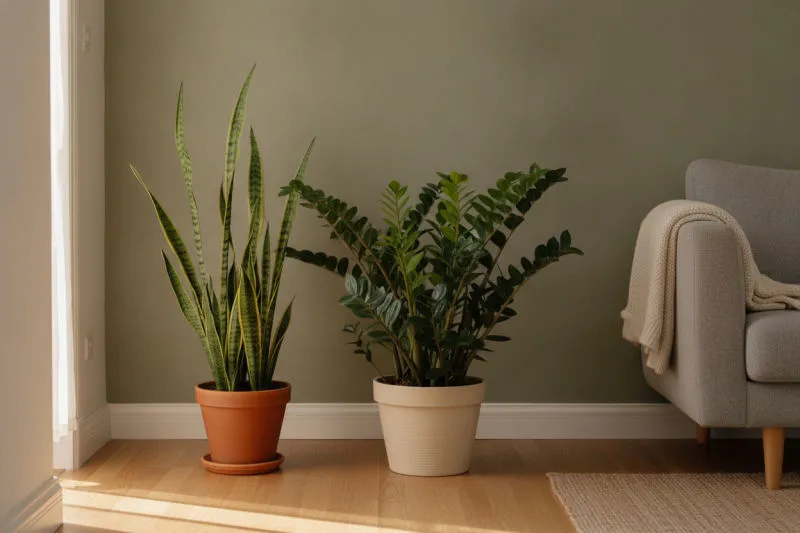 Round-ups 5 min
 June 21, 2026
Low-maintenance houseplants: eight species that forgive neglect
No time, no patience, sometimes a faulty memory: eight indoor plants that survive almost anything without complaining.
Read the article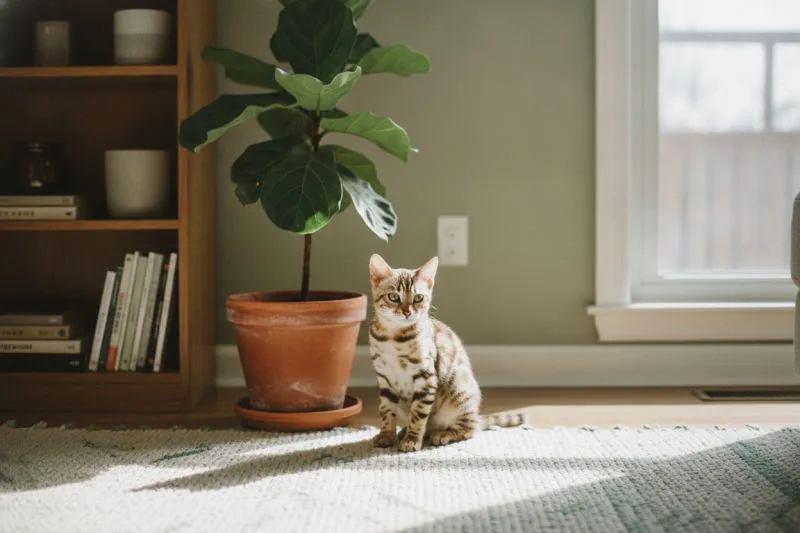 Round-ups 6 min
 June 6, 2026
Pet-safe houseplants for cats and dogs, the reliable list
Got a curious cat or dog? Here are the indoor plants you can welcome safely, and the ones to avoid at all costs.
Read the article