Guides
 How to make your orchid bloom again, the guide that actually works
Your Phalaenopsis dropped its flowers and has been green for six months? Here is how to trigger a new bloom, step by step.
 Plenova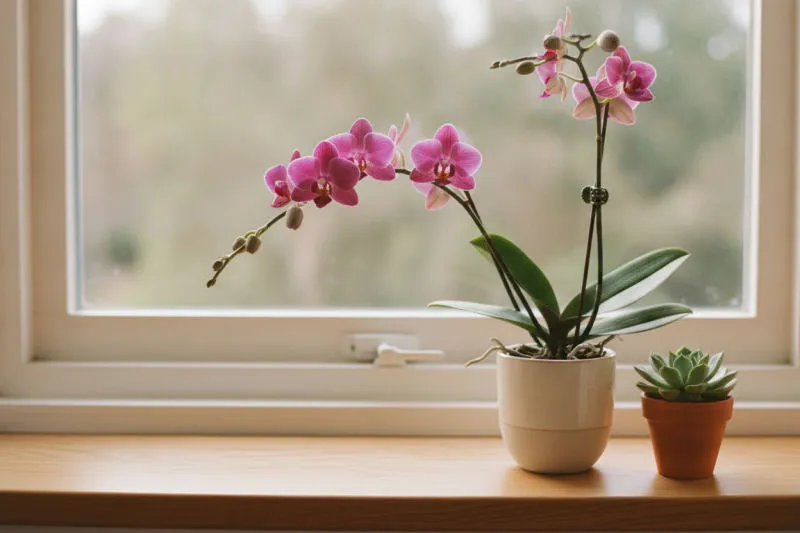
Contents 10
- 01 Why your orchid is not reblooming
- 02 Step 1, the light
- 03 Step 2, trigger the bloom with cold
- 04 Step 3, the right watering
- 05 Step 4, fertilizer
- 06 What to do with the spike after blooming
- 07 Aerial roots, leave them alone
- 08 Repotting an orchid
- 09 Why my orchid has wrinkled leaves
- 10 The right timing with Plenova
The gift Phalaenopsis is often the same story: a spectacular bloom the first year, then nothing. The plant stays green and healthy, but never reblooms. The secret is not in the watering or the fertilizer. It is somewhere else entirely.
Why your orchid is not reblooming
Three reasons cover almost every case:
- Not enough light: the most common one. An orchid moved from a west-facing room to a dark corner pauses its blooming.
- No temperature drop: a Phalaenopsis needs a 8 to 14°F variation between day and night for 3 to 4 weeks to trigger a new spike.
- Overwatering: roots rot, the plant survives but never blooms.
Step 1, the light
Bright indirect light is mandatory. Ideally near an east window, or a west window behind a sheer curtain. A bright north window also works. An orchid in a dark corner will never rebloom.
Quick test: hold your hand between the plant and the window. If it casts no clear shadow, it is too dark.
Step 2, trigger the bloom with cold
The trick nobody tells you. A Phalaenopsis that will not rebloom often just needs a cold snap.
Around late September or October, move the orchid to a room where the night drops to 60-63°F (cold bedroom, unheated sunroom, near a cool window). Daytime, 68-72°F. That difference over 3 to 4 weeks sends a hormonal signal that triggers a new flower spike.
After about a month, you will see a small green tip appear at the base of a leaf. You won. You can move it back to its usual spot.
Step 3, the right watering
A Phalaenopsis hates wet roots all the time. The rule:
- Water only when the aerial roots turn silvery gray (sign of thirst).
- Soak the pot for 10 minutes in lukewarm water, then drain thoroughly.
- Never water into the crown of the plant (leaf rosette), it rots.
Average frequency: every 7 to 10 days in summer, every 14 days in winter. But always check the roots first.
Step 4, fertilizer
A Phalaenopsis does not need much, but it needs it regularly. Special orchid fertilizer, half diluted, once every two weeks from March to October. No fertilizer in winter.
Too little slows blooming. Too much burns the roots. The sweet spot: small but regular doses.
What to do with the spike after blooming
Once the flowers are gone, two options.
Option 1, cut above the second node (counting from the bottom). Encourages a fast rebloom on the same spike, within 2 to 3 months. Faster but fewer flowers.
Option 2, cut the spike at its base. The plant produces a new spike in 4 to 8 months, with a more generous bloom. Recommended for long-term health.
Cut with a blade wiped with alcohol, just above a node, at an angle.
Aerial roots, leave them alone
Many beginners cut the aerial roots that come out of the pot. Mistake. These roots are essential to the plant's breathing and capture ambient humidity. Leave them, do not bury them.
If they are really excessive, gently guide them toward the pot, but never force.
Repotting an orchid
Every 2 to 3 years, in special pine bark for orchids (never regular potting soil). The clear pot lets you see the root state: green = healthy, silvery white = thirsty, brown mushy = cut off.
Why my orchid has wrinkled leaves
Wrinkled, soft leaves signal root dehydration (often from overwatering that rotted them, the classic paradox). Pull the plant out, cut the black roots, repot in fresh bark, resume light watering.
The right timing with Plenova
Plenova reminds you to water and feed your Phalaenopsis at its own pace, and to repot it in the right season. The cool autumn nights that restart flowering are still yours to provide.
Your Phalaenopsis can rebloom every year for 10 years or more. You just have to know when to give it that little nudge of cool air.
Found this useful? Pass it on.
 Guides 8 min
  Guides
 June 27, 2026
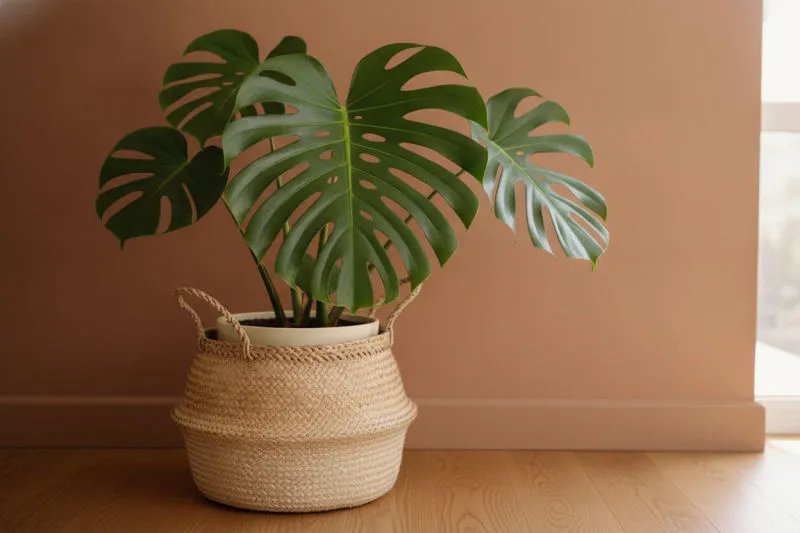
Caring for your Monstera, the guide to those iconic split leaves
Monstera deliciosa is the houseplant of the decade. Light, water, fenestration, aerial roots: here is how to turn yours into a real indoor jungle.
Read the article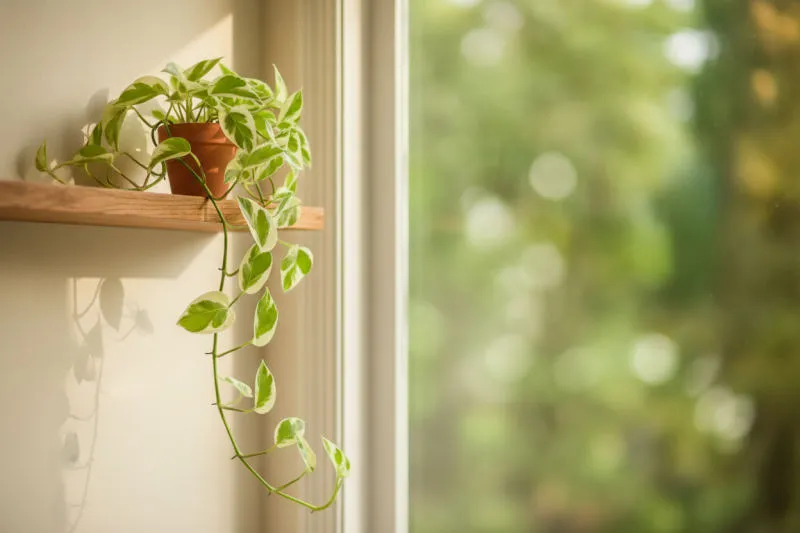 Guides 6 min
 June 26, 2026
Pothos, the complete guide: varieties, care and propagation
Golden, Marble Queen, Neon, N'Joy: everything you need to know about pothos, the most popular houseplant in the world.
Read the article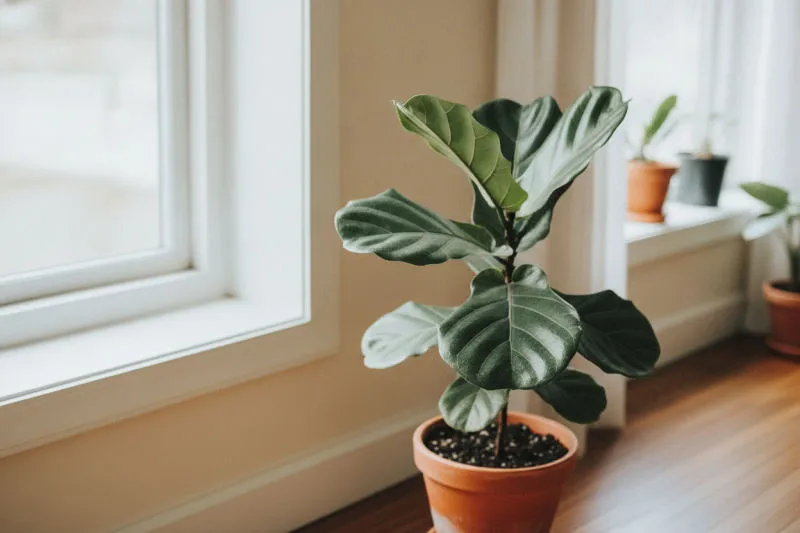 Guides 9 min
 June 25, 2026
Caring for your Ficus, lyrata, benjamina or rubber tree
Ficus is a whole genus, not one plant. Light, water, latex sap, pruning: a guide to figuring out your variety and keeping it beautiful for years.
Read the article