Care
Care How to repot a houseplant, step by step
Repotting can transform or kill your plant. Here is the method that works, the right timing, and the mistakes to avoid.
 Plenova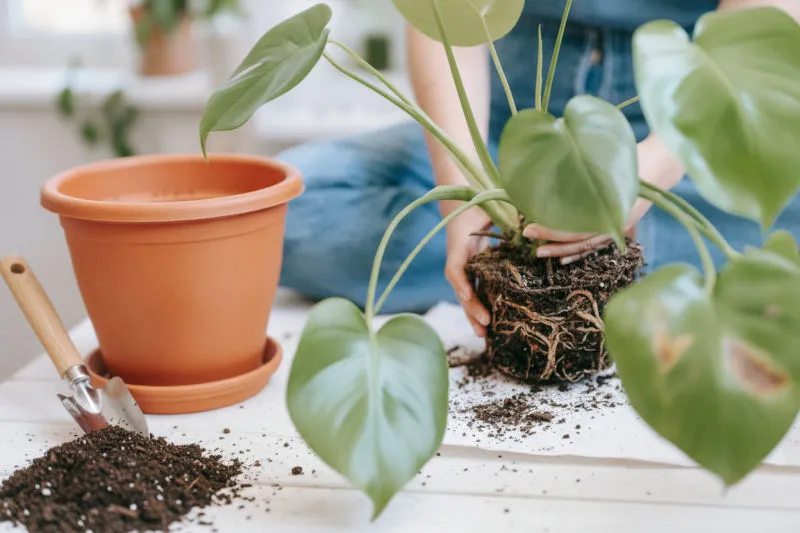
Contents 5
Repotting intimidates a lot of beginners. Yet it is one of the simplest moves, as long as you do it at the right time and with the right tools. Here is how to repot without stressing the plant or yourself.
When to repot
Three signs that do not lie:
- Roots come out the drainage holes at the bottom.
- The substrate dries in less than two days when it used to last a week.
- The plant tilts because it has become too heavy for its pot.
The right moment: spring, when growth picks up again. March to May in Europe, similar window in the U.S. Avoid winter, the plant is dormant and heals poorly.
For rhizome plants (snake plant, ZZ), every 2-3 years is plenty. For fast growers (Pothos, Monstera), yearly while young.
What you need
- A pot 1-2 inches wider in diameter than the current one, with a drainage hole.
- Fresh substrate matched to the species.
- Clay pebbles (optional, useful).
- A clean blade or pruner, wiped with alcohol.
- A sheet of newspaper or a tarp for the floor.
The 8 steps
1. Prep the new pot
Lay a thin layer of clay pebbles at the bottom (about half an inch). Cover with a thin layer of fresh substrate.
2. Remove the plant from its pot
Tip the pot upside down, supporting the root ball with one hand. Tap the rim gently. If the plant refuses to come out, squeeze the sides to release the ball.
For a rigid pot where nothing budges, break it. A plant fully rooted in its pot will not come out otherwise.
3. Check the roots
The most important step. Healthy roots are white or cream, firm to the touch. Bad ones are black, mushy, sometimes smelly.
With your blade:
- Cut every black, mushy root.
- If the root ball is spiraling tight, untangle gently with your fingers or score the outside with a clean blade.
- If more than 30% of the roots were rotten, do not size up. Keep or downsize.
4. Prep the substrate
The substrate should be slightly moist, never soaked. If the bag is too dry, mist a little water and mix.
5. Place the plant
Center the plant in the pot, adjust the height. The crown (where stems meet roots) should sit about half an inch below the rim.
6. Fill the sides
Pour substrate around the plant, pressing gently with your fingers. No hard packing, just enough to remove air pockets.
7. Water moderately
First watering right after repotting, gentle pour, until water drains out the bottom. This helps the substrate settle around the roots.
8. Recovery placement
Soft indirect light for 2 to 3 weeks, no full sun. No fertilizer for one month, time for the cut roots to heal.
Common mistakes
Pot too big. The longer the water lingers, the more roots rot. Stick to the 1-2 inch rule.
Substrate too rich. Pure garden soil or peat-heavy mixes hold too much water. Add perlite or bark.
Immediate fertilizer. Fragile roots cannot absorb, fertilizer burns them. Wait at least one month.
Direct sun after repotting. The plant is recovering, sun exhausts it. Indirect light only.
Pressing too hard. You compact the substrate, water no longer penetrates. Light pressure, the substrate settles after a few waterings.
The right timing with Plenova
Plenova tracks each plant's age in your collection and fires a reminder when it is ready to be repotted. No more "I should have done it last spring", the app notes it for you and gives the species-specific protocol.
A well-done repotting buys you five years of healthy growth without touching anything else.
Found this useful? Pass it on.
 Care 5 min
  Care
Care October 10, 2026
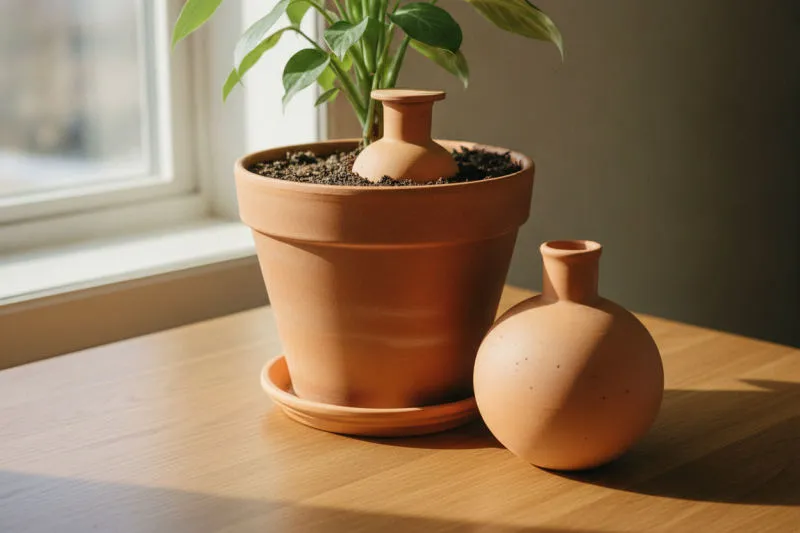
The olla: the clay pot that waters your plants for you
Buried next to a plant and filled with water, an olla releases it into the soil day after day. How it works, which plants it suits, and how to set one up.
Read the article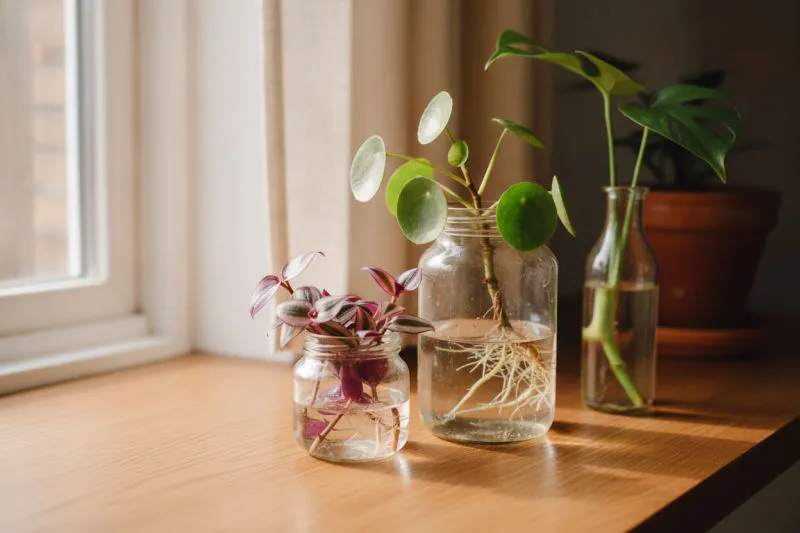 Care 9 min
 June 8, 2026
How to propagate a plant, the complete guide that actually works
Propagation turns a single plant into many. Real methods that work, broken down by species, with no gimmicks.
Read the article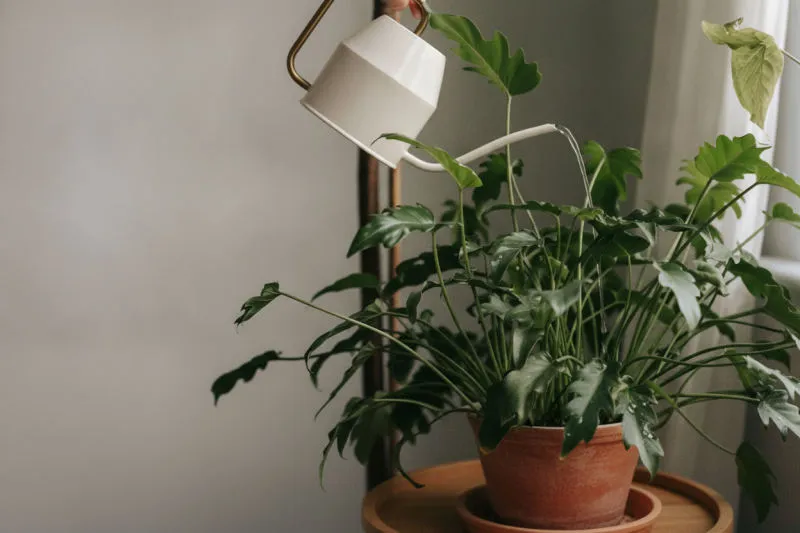 Care 5 min
 June 4, 2026
What water to use for your houseplants: tap, rain, distilled
Is tap water really bad for your plants? The complete guide so you stop guessing.
Read the article