Pests
Pests Spotting and stopping houseplant pests, the complete guide
Mealybugs, spider mites, thrips, aphids: how to identify the pest attacking your plant and get rid of it for good.
 Plenova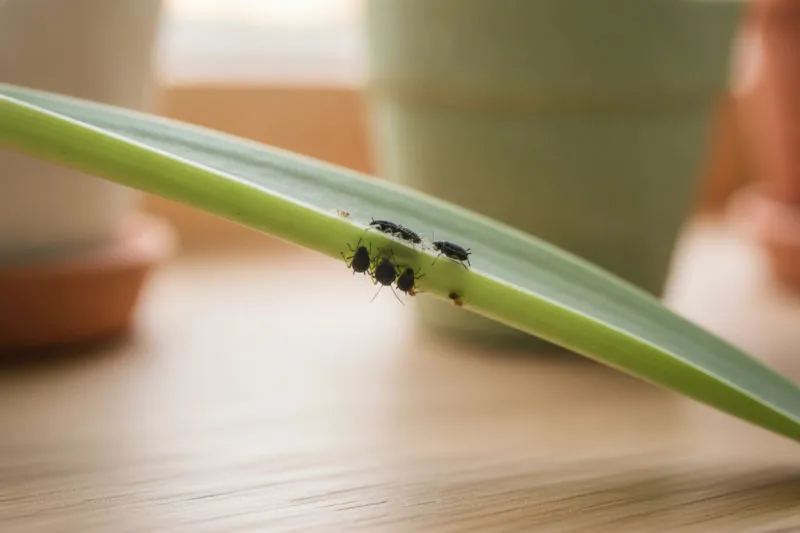
Contents 10
Five pests cause 90% of indoor plant infestations. Knowing the signature saves you three weeks on the treatment. Here is the full file, pest by pest, with natural solutions that work.
Identify the pest in 30 seconds
- Small white cottony clusters in leaf joints → mealybugs
- Brown crusty bumps stuck to stems, sticky sap → scale insects
- Fine webs under leaves, yellow speckles → spider mites
- Silvery patches, leaf distortion → thrips
- Green or black insects clustering on new growth → aphids
- Tiny black gnats around the pot → fungus gnats
Mealybugs
The most common pest on indoor plants. Small white cottony insects hiding in the joints between leaves and stems.
Treatment: dab each cluster with a cotton swab dipped in 70% rubbing alcohol. The alcohol dissolves their waxy coat and kills them on contact. Repeat every 5 days for three weeks to break the breeding cycle.
For a heavy infestation, mild dish soap diluted (one tablespoon per quart) sprayed on the foliage after the alcohol. Isolate the plant from the others.
Scale insects
Mealybug's armored cousins. Small brown bumps stuck to stems and leaves. Sticky sap, called honeydew, attracts black sooty mold.
Treatment: scrape the shells off by hand with a fingernail or a flat blade. Then spray with horticultural oil (sold at garden centers) to suffocate the survivors. Honeydew on the leaves cleans up with soapy water.
Spider mites
Not actually spiders, they are mites. Show up on tropical plants in dry, warm rooms. Fine webs, yellow speckles on top, tiny red dots underneath.
Treatment: lukewarm shower, focusing under the leaves. Push ambient humidity over 50%, that is their nightmare. Spray neem oil twice, 5 days apart.
Classic mistake: treating once and stopping. Eggs survive, they hatch a few days later. Three treatments minimum.
Thrips
The hardest to spot. Tiny elongated insects leaving silvery patches and black droppings. Leaves distort.
Treatment: neem oil spray, or natural pyrethrum. Yellow sticky traps near the plant (thrips love yellow). Cut off heavily damaged leaves to limit the population.
Aphids
Soft green or black, clustered on new growth. Cause distorted, sticky leaves.
Treatment: high-pressure shower, diluted insecticidal soap, or just squish them. Ladybugs are their natural predators if you have outdoor space nearby.
Fungus gnats
Not a leaf pest but tiny gnats laying eggs in moist substrate. Annoying more than dangerous. Symptom: a cloud of small flies when you move the pot.
Treatment: let the substrate dry out fully between waterings, they only thrive in constant moisture. Yellow sticky traps for adults. For larvae, water with a few drops of dish soap added (very effective).
Natural treatments that work
Insecticidal soap: one tablespoon mild soap in one quart of warm water. Spray on foliage, knocks off mealybugs and aphids. Use in the evening, never in full sun.
Neem oil: extract from an Indian tree with natural insecticidal properties. Broad spectrum against most pests. Mix one teaspoon in one quart of water with a drop of soap as emulsifier.
70% alcohol: targeted on mealybugs. Cotton swab only, never spray on whole foliage (would burn the leaves).
Prevention, the best treatment
90% of pest problems come from outside. New plants you bring home. A few rules:
- Inspect every new plant before introducing it, top and bottom of leaves.
- Quarantine for 15 days, away from the others.
- Keep ambient humidity reasonable. Most pests love dry air.
- Wipe leaves with lukewarm water once a month. Young eggs come off in the wash.
When to ask for a precise diagnosis
If you are unsure about the pest, snap a photo in Plenova. The app recognizes the major species and proposes the right protocol.
A healthy plant resists attacks better. Light, proper watering, and the right humidity are the best prevention you have.
Found this useful? Pass it on.
 Pests 6 min
  Pests
Pests June 30, 2026
Why are my plant leaves turning yellow, the 7 most common causes
Yellow leaves on your houseplant? Overwatering, low light, nutrient deficiency, or pests: here is how to find the exact cause and fix it.
Read the article Pests 6 min
 June 29, 2026
How to save a dying houseplant, the emergency protocol
Falling leaves, mushy stems, black roots: a 5-step action plan to bring back a plant on the brink.
Read the article