Care
Care Homemade fertilizer for houseplants, seven recipes that work
Coffee grounds, vegetable cooking water, banana peel: what really works and what is a myth in DIY plant fertilizers.
 Plenova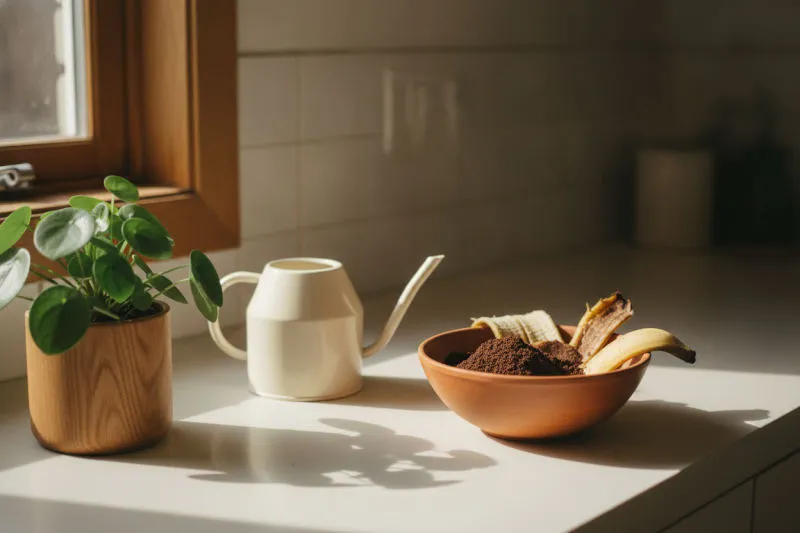
Contents 11
Before buying fertilizer, look at your kitchen scraps. Several organic leftovers contain exactly what your plants need. Here are seven recipes that really work, and three myths to drop.
Why fertilize
A potted plant lives in a finite volume of substrate. Within months, it absorbs every available nutrient. Without fertilization, growth slows, leaves pale, blooms disappear.
Three main elements to deliver:
- Nitrogen (N): for foliage.
- Phosphorus (P): for roots and flowers.
- Potassium (K): for resistance and fruits.
1. Vegetable cooking water
The simplest trick. Cooking water from potatoes, carrots, broccoli, or rice: cooled and unsalted, it carries a solid dose of potassium and trace elements.
Use as your watering water once a week in spring. Never salt this water, salt is toxic to plants.
2. Coffee grounds
Rich in nitrogen and trace elements. Do not put it directly on the substrate (acidifies too fast), but add to compost or brew it.
Recipe: 2 spoons of dried grounds in 1 quart of water, steep 12 hours, strain. Water with this brew once a month.
Great for acid-loving plants (azalea, hydrangea, gardenia, ferns). Avoid for cacti and succulents.
3. Banana peel
Very high in potassium, perfect for flowering plants. Cut the peel into small pieces, soak them in 1 quart of water for 48 hours. Strain and water.
The other method: bury a piece of peel directly in the substrate. But watch out for fungus gnats, the brew is safer.
4. Eggshells
High in calcium, useful for heavy users (tomatoes, peppers grown indoors). Dry the shells, crush them into fine powder, sprinkle 1 teaspoon on the substrate every 2 months.
Alternative as a brew: 5-6 crushed shells in 1 quart of water, 24 hours, strain.
5. Wood ashes
High in potassium and phosphorus. Pure wood-burned fireplace ashes (never treated wood or paper), one tablespoon max per pot, mixed into the substrate surface every 3 months.
Caution: alkaline, so avoid for acid-loving plants.
6. Aquarium water
Have a fish tank? The changed water is a perfect fertilizer, rich in nitrogen and already at the right temperature. Use it directly when watering.
7. Diluted nettle tea
The universal gardener's fertilizer. Buy or make nettle tea (nettles macerated in water for 7-15 days, smells very strong). Dilute to 10% (1 part tea to 9 parts water) and water every two weeks in spring.
Very effective but the smell is strong. Pick the bottled commercial version if you live in a city.
Three myths to drop
Sugar water: does not feed the plant (which makes its own sugar via photosynthesis) and feeds pathogenic fungi.
Milk: rots, attracts gnats. Apart from very diluted leaf sprays against some fungi, skip it.
Coca-Cola: just no. Too much sugar and poorly absorbable phosphoric acid.
When to fertilize
Spring and summer, the growth period. Not in fall, and absolutely not in winter: the plant is dormant, fertilizer burns the roots.
Frequency: every two weeks for mild fertilizers like cooking water, monthly for more concentrated recipes.
The right dose with Plenova
The number one risk with both DIY and commercial fertilizers is overdosing. Plenova schedules fertilizer reminders by species and season: you feed when the plant is growing and leave it alone while it rests. An under-fertilized plant grows slowly, an over-fertilized one burns.
Found this useful? Pass it on.
 Care 5 min
  Care
Care October 10, 2026
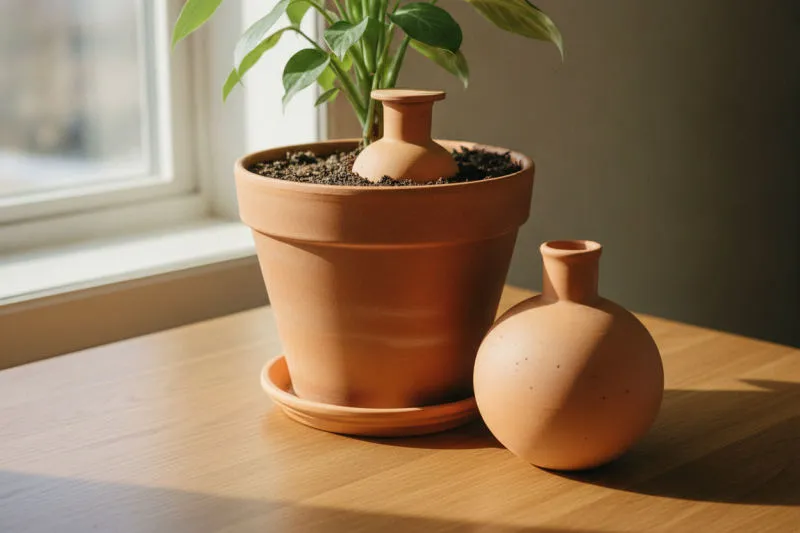
The olla: the clay pot that waters your plants for you
Buried next to a plant and filled with water, an olla releases it into the soil day after day. How it works, which plants it suits, and how to set one up.
Read the article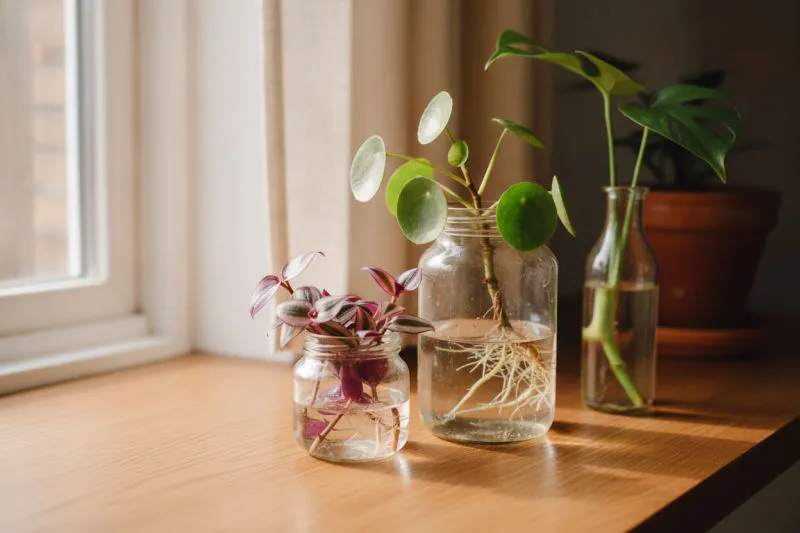 Care 9 min
 June 8, 2026
How to propagate a plant, the complete guide that actually works
Propagation turns a single plant into many. Real methods that work, broken down by species, with no gimmicks.
Read the article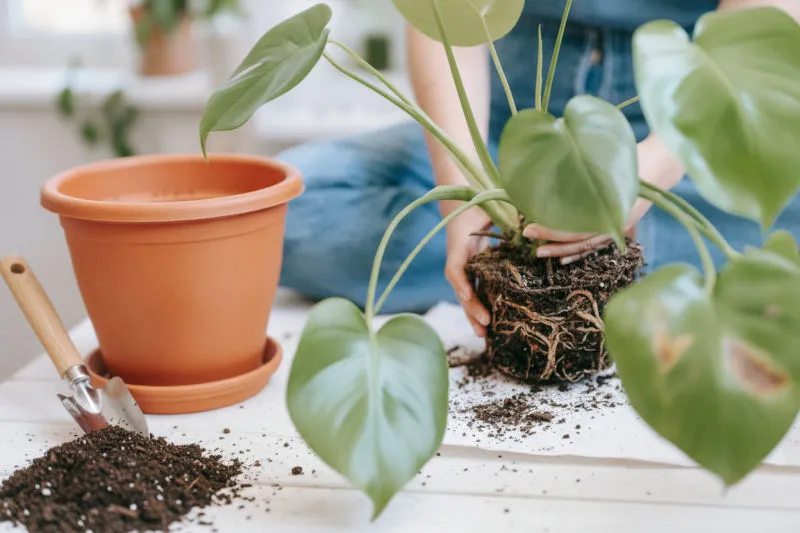 Care 6 min
 June 7, 2026
How to repot a houseplant, step by step
Repotting can transform or kill your plant. Here is the method that works, the right timing, and the mistakes to avoid.
Read the article