Care
Care What water to use for your houseplants: tap, rain, distilled
Is tap water really bad for your plants? The complete guide so you stop guessing.
 Plenova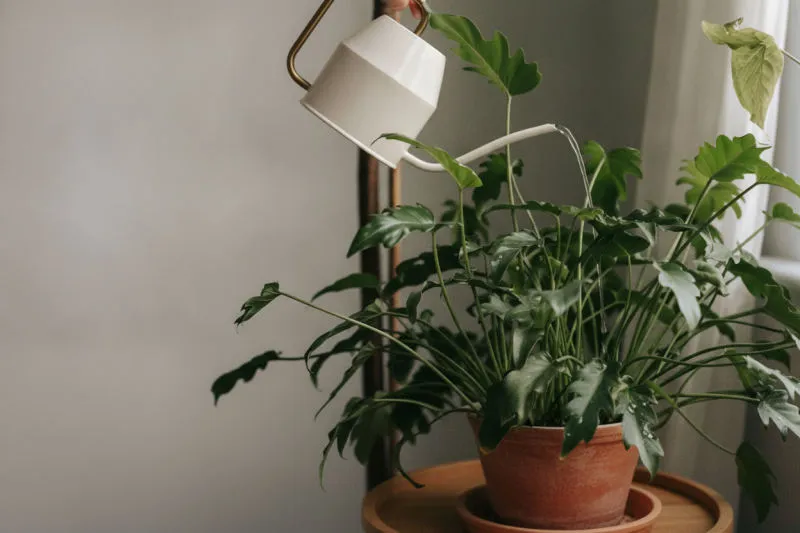
Contents 9
Water is the element we rarely think twice about, yet it can make a big difference for some plants. Lime, chlorine, temperature, pH: here is what really matters and when.
What is in tap water
Tap water typically contains:
- Lime (calcium and magnesium): hardness varies widely by region.
- Chlorine: added at 0.1-0.3 mg/L for disinfection.
- Fluoride: added in some regions, in small amounts.
- Trace metals: copper, lead (old pipes), zinc.
- pH: 7-8.5 (slightly basic).
For most houseplants, this cocktail is fine. For some, it is a problem.
Plants sensitive to tap water
Acid-loving and tropical plants:
- Calathea, Maranta, Stromanthe: brown tips guaranteed with hard water.
- Orchids: especially Phalaenopsis, sensitive to lime over time.
- Carnivorous plants: die within weeks on tap water.
- Ferns: variable tolerance, prefer filtered water.
- Anthurium: variable sensitivity by variety.
For these plants, hard tap water builds up lime in the substrate, making roots less efficient and burning leaf tips.
Plants that handle it
The majority of common houseplants:
- Pothos, Philodendron, Monstera
- Snake plant, ZZ, Cast iron
- Succulents and cacti
- Rubber tree, Ficus benjamina
- Mediterranean plants
- Aglaonema, Peace lily
Tap water suits them. As long as you let it sit 24 hours to evaporate chlorine.
Water sources, ranked
Tap water (free, everywhere)
Acceptable for most plants after resting. For sensitive ones, avoid.
Tip: fill a watering can and leave it open overnight. Chlorine evaporates, lime stays but the plant is not shocked by cold water.
Rainwater (free, ideal)
The absolute best. Neutral pH, low minerals, naturally suited to plants. If you have a balcony, an 8-gallon barrel covers a year.
Caveat: avoid rainwater collected under zinc or slate roofing (heavy metals). Use a stretched tarp or a dedicated barrel.
Filtered water (cheap, practical)
Brita pitcher or equivalent: removes 90% of lime and chlorine. Enough for Calathea and other sensitive plants.
Cost: ~$30 pitcher, ~$5 monthly cartridge. Reasonable if you have few plants.
Distilled water (pricier, for special cases)
Bought at the pharmacy or supermarket (~$1/L). Pure, mineral-free. Ideal for carnivorous plants and rare orchids.
Aquarium water (free, magical)
If you have a tank, the changed water is a natural fertilizer for plants. Rich in nitrogen and trace elements, already at room temperature.
Defrost water from the freezer
Surprisingly, water that drips out of the freezer when defrosting is nearly distilled. Collect it, let it warm up, use on sensitive plants.
Temperature: a detail that matters
Cold water on roots = thermal shock. Yellowing leaves, stressed roots.
Rule: room-temperature water. Either fill the watering can an hour ahead, or mix a bit of warm water.
Especially important for tropicals, which dislike swings below 65°F.
pH: worth knowing but often secondary
For most houseplants, tap water pH (7-8.5) is fine. A few special cases:
- Acid-lovers (azalea, gardenia, hydrangea, ferns): prefer pH 5.5-6.5. Rainwater ideal.
- Carnivorous plants: pH 4-5, distilled water mandatory.
- Orchids: pH 6-6.5, filtered water ideal.
Signs of a water problem
- Crispy brown tips → lime (hard water)
- White spots on leaves → misted with hard water
- White crust on the pot → lime rising from evaporation
- Yellow leaves after watering → chlorine (water not rested)
- Plant slowly declining → mineral buildup in substrate
The simple fix: refresh the substrate
If your substrate is lime-saturated after years of tap water, simple repotting with fresh mix solves 80% of issues.
No need to change your whole routine, just repot every 1-2 years.
With Plenova
Each species card in the Plenova catalog explains how to water it. For the plants most sensitive to limescale and chlorine, keep rainwater or filtered water for them.
Perfect water does not exist. Water suited to each plant does. And it is much simpler than people think.
Found this useful? Pass it on.
 Care 5 min
  Care
Care October 10, 2026
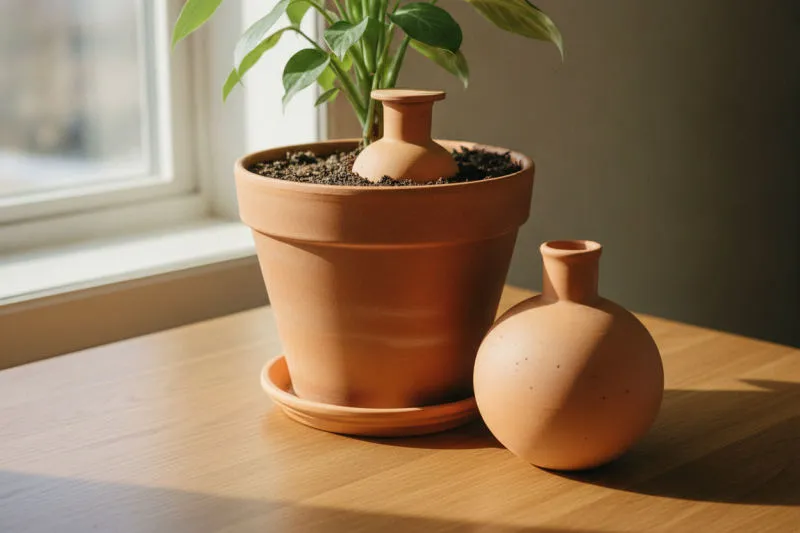
The olla: the clay pot that waters your plants for you
Buried next to a plant and filled with water, an olla releases it into the soil day after day. How it works, which plants it suits, and how to set one up.
Read the article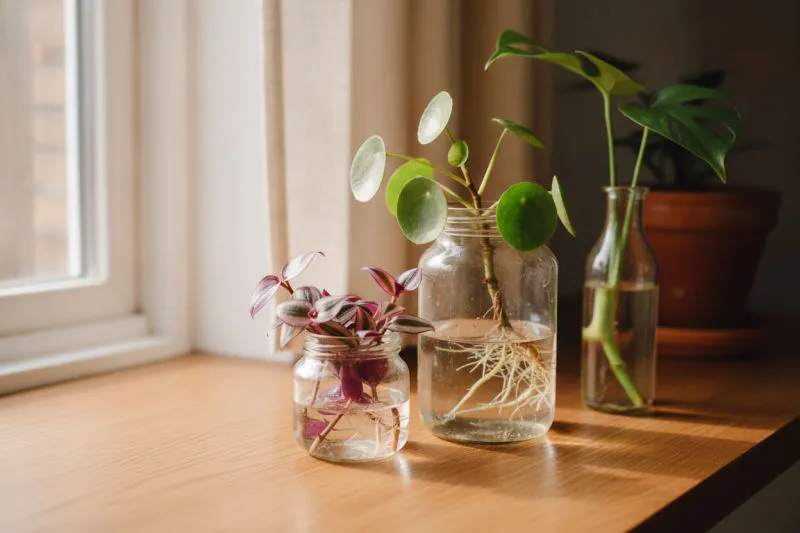 Care 9 min
 June 8, 2026
How to propagate a plant, the complete guide that actually works
Propagation turns a single plant into many. Real methods that work, broken down by species, with no gimmicks.
Read the article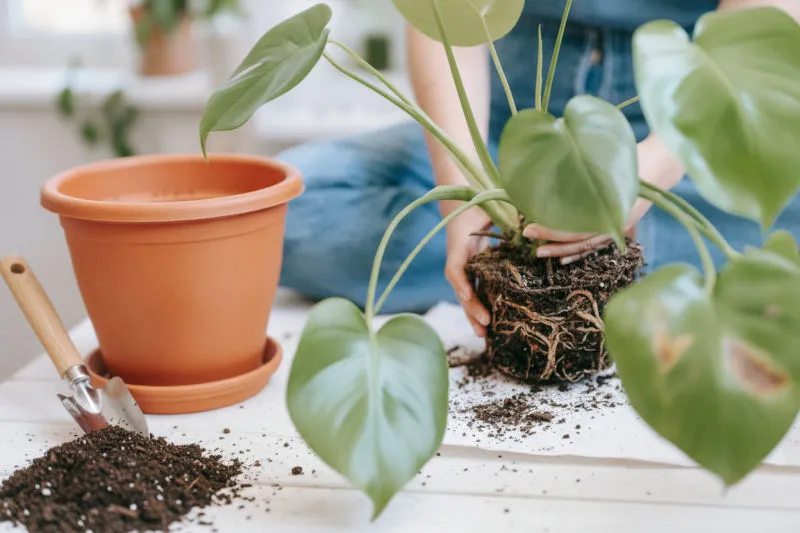 Care 6 min
 June 7, 2026
How to repot a houseplant, step by step
Repotting can transform or kill your plant. Here is the method that works, the right timing, and the mistakes to avoid.
Read the article