Round-ups
 The best plants for beginners, six species that forgive your slip-ups
You want a bit of green at home without losing your mind over it. Here are six low-key plants, what they actually need, the mistakes to avoid.
 Plenova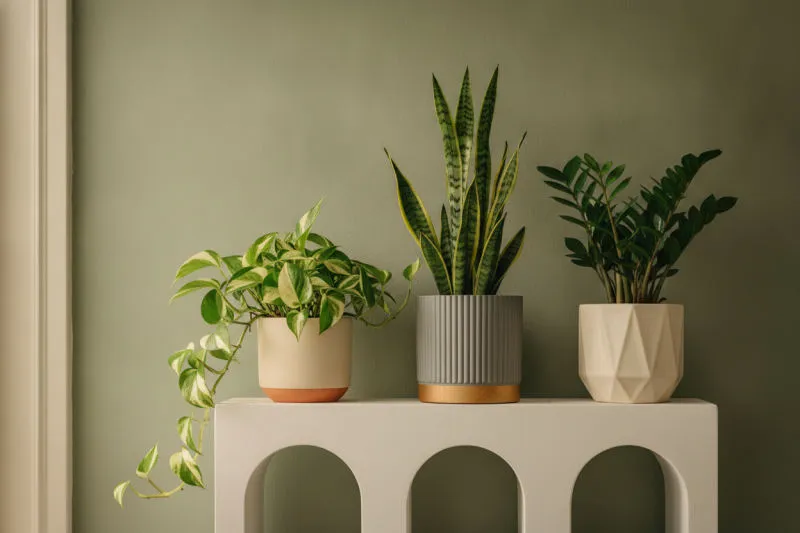
Contents 9
- 01 Quick picks
- 02 Two things to check at home before you pick
- 03 1. Golden Pothos, Epipremnum aureum
- 04 2. Snake plant, Dracaena trifasciata
- 05 3. ZZ Plant, Zamioculcas zamiifolia
- 06 4. Pilea peperomioides
- 07 5. Christmas cactus, Schlumbergera
- 08 6. English ivy, Hedera helix
- 09 How Plenova helps in practice
You just moved in, or you simply want a bit of green on the shelf. You probably also lost a few plants in the past. Good news, that is not on you. It is often on the species. Some plants forgive missed waterings, dry radiators, the occasional heatwave. Others want a Michelin-grade caregiver.
Here are six species that fit almost anywhere, what they really need, and the mistakes that take them down within weeks.
Quick picks
- Golden Pothos for trailing greenery, almost impossible to kill.
- Snake plant for the bedroom, takes shade and dry air.
- ZZ Plant for a low-light office, barely needs water.
- Pilea peperomioides for a graphic look on a sideboard.
- Christmas cactus for winter blooms with no fuss the rest of the year.
- English ivy to dress up a darker corner, perfect in a hanging basket.
Two things to check at home before you pick
Ask yourself one simple question: does direct sun ever hit the spot, even briefly during the day? If yes, many tropicals will burn. If not, you have indirect light, which is exactly what most houseplants prefer.
Dry winter air in a heated apartment is the second issue. Many tropical plants hate dropping below 50% humidity. Lucky for you, the six plants we are about to cover handle dry rooms just fine.
1. Golden Pothos, Epipremnum aureum
Sold as "devil's ivy", because it grows fast and forgives almost everything.
Light: bright indirect or low. It survives in a corner of a bookshelf far from any window.
Water: when the top inch of substrate feels dry. Forget rather than drown.
Common mistake: dropping it in a decorative pot with no drainage. Water pools, roots rot. Drill the pot, or empty the cachepot after each watering.
It is also the perfect plant for a first cutting. A six-inch stem in a glass of water gives you fresh roots in two weeks.
2. Snake plant, Dracaena trifasciata
Nicknamed "mother-in-law's tongue", it tolerates basically everything.
Its trick is its CAM metabolism. It opens its stomata at night, which limits water loss. Practical upside, it handles long stretches without watering. With no pollen or heady scent, it also suits a bedroom.
Light: anything from filtered direct sun to deep shade. It grows faster in bright light, but survives in a windowless bathroom.
Water: every three to four weeks in summer, once a month in winter. When in doubt, wait another week.
Common mistake: leaves go soft and bend at the base. Almost always overwatering. Pull it out of the pot, cut off the black roots, repot in a very free-draining substrate.
3. ZZ Plant, Zamioculcas zamiifolia
If you travel often, this is your friend. The ZZ stores water in rhizomes the size of small potatoes. You can forget it for a month, it waits for you.
Light: low to moderate. It tolerates an office lit only by a fluorescent ceiling.
Water: every two to four weeks depending on the season. The pot should dry out completely between waterings.
Common mistake: leaves yellow and drop. Water again. Its rhizomes rot fast when you push your luck. Space your waterings, and rotate it now and then so it grows straight.
A small caveat, its sap is mildly irritating. Wash your hands after taking a cutting, and keep it away from a curious cat.
4. Pilea peperomioides
The "Chinese money plant", with its round, parasol-shaped leaves.
Light: bright indirect. Near a sheer-curtained window facing east, it is in its element.
Water: when the surface of the substrate feels dry. It prefers slightly too dry over slightly too wet.
Common mistake: leaves curl or warp. That is a sign it is reaching for light. Rotate the pot a quarter turn every week so it grows straight.
A bonus, it sends up babies around the base regularly. Detach them with a piece of root, repot, gift Pileas to your friends.
5. Christmas cactus, Schlumbergera
Despite the name, this is not a desert cactus. It is an epiphyte from Brazilian forests.
Light: bright indirect. It loves the cool of an unheated room in autumn, which actually triggers the bloom.
Water: regular but moderate. The substrate should stay slightly moist during flowering, then dry out more the rest of the year.
Common mistake: moving the plant when it is full of buds, which makes it drop them. Pick its spot before it blooms, and leave it there.
It is the only one of the six that flowers reliably indoors, and the timing falls right when you want it, in November or December.
6. English ivy, Hedera helix
Variegated green-and-cream forms, or deep solid green. Pick what fits your space.
Light: medium to bright, indirect. Variegated forms need more light than solid green ones.
Water: when the surface dries. Ivy enjoys a slightly higher ambient humidity than average. An occasional misting helps.
Common mistake: spider mites. When the air gets too dry, these tiny mites settle on the underside of leaves. You will see fine webbing. A lukewarm shower over the leaves dislodges them, repeat once a week for a month.
How Plenova helps in practice
You scan your plant after you bring it home. The app names the species, gives you its full card, the exact needs for your home, and schedules watering reminders based on pot size and light exposure. If a leaf turns yellow, you snap a fresh photo: Plenova diagnoses and suggests a fix.
The point is not to build the perfect indoor jungle right away. The point is to keep plants alive, long enough to enjoy them. The rest follows.
Found this useful? Pass it on.
 Round-ups 5 min
  Round-ups
 June 21, 2026
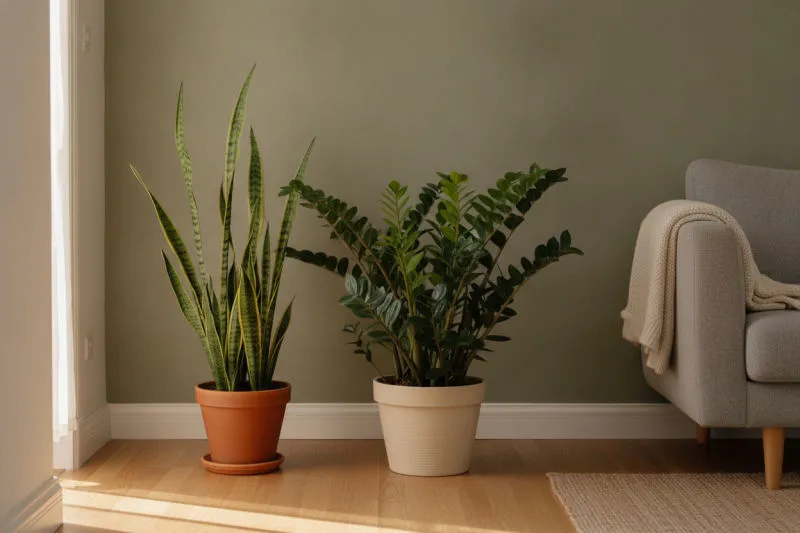
Low-maintenance houseplants: eight species that forgive neglect
No time, no patience, sometimes a faulty memory: eight indoor plants that survive almost anything without complaining.
Read the article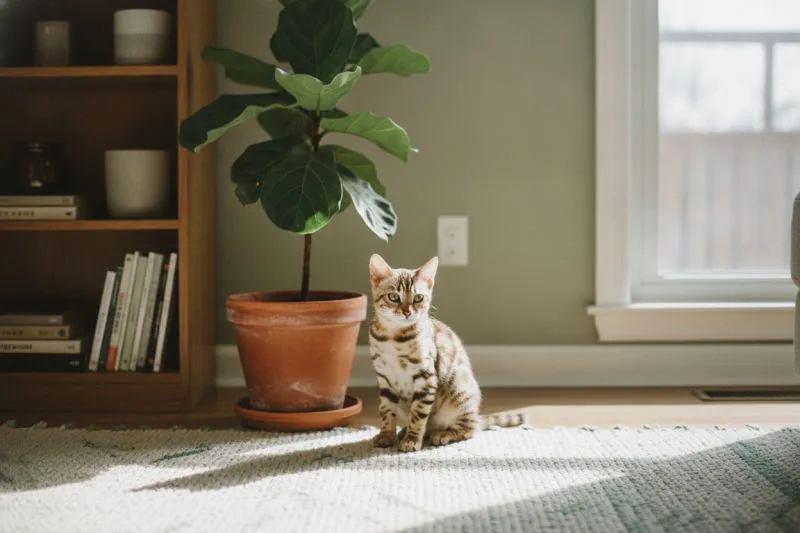 Round-ups 6 min
 June 6, 2026
Pet-safe houseplants for cats and dogs, the reliable list
Got a curious cat or dog? Here are the indoor plants you can welcome safely, and the ones to avoid at all costs.
Read the article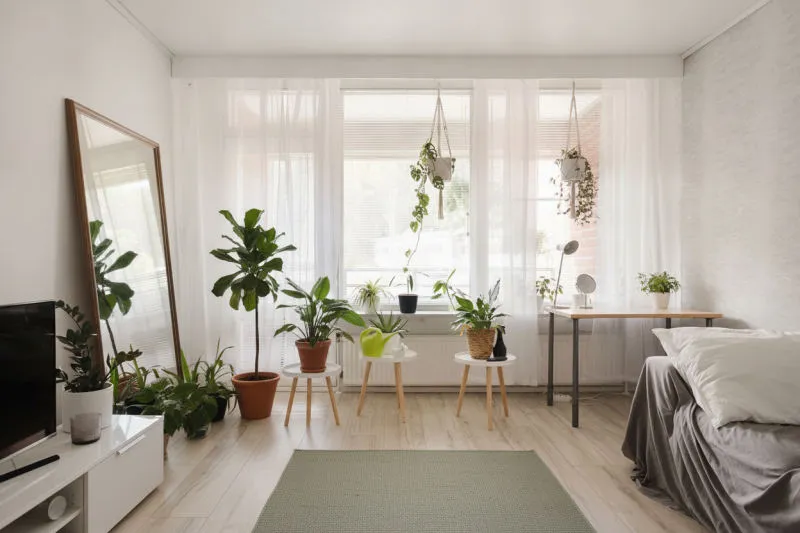 Round-ups 6 min
 June 5, 2026
The best air-purifying houseplants for your home, what actually works
Peace lily, snake plant, spider plant: a no-marketing rundown of plants that really clean indoor air.
Read the article